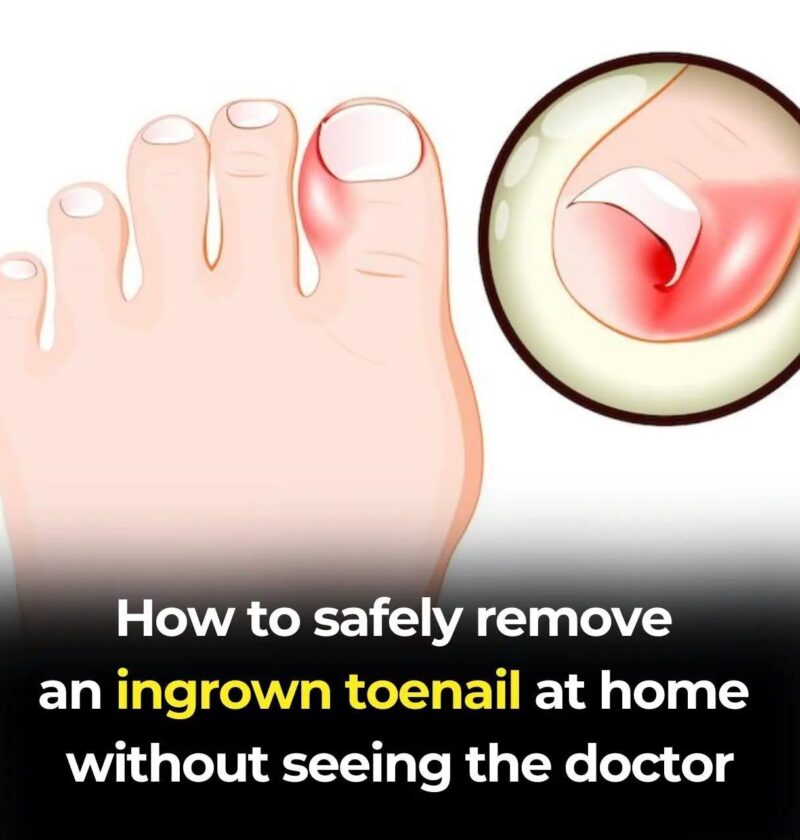
If you have a painful ingrown toenail, it’s important to distinguish between mild cases that can be managed at home and cases that need medical treatment. Trying to “remove” an ingrown toenail yourself—especially by cutting deeply into the nail or digging under the skin—can make the problem worse, cause infection, or lead to a more severe ingrown nail.
When home care may be appropriate
If the nail is only mildly ingrown and there are no signs of infection (no pus, spreading redness, fever, or severe swelling), you can try the following:
- Soak the foot
- Soak in warm water for 15–20 minutes, 3–4 times a day.
- This softens the skin and reduces discomfort.
- Gently lift the nail edge
- After soaking, if you can comfortably see the edge of the nail, you can gently lift it with clean dental floss or a tiny piece of sterile cotton.
- Do not force it if it’s deeply embedded or very painful.
- Replace the floss or cotton daily.
- Apply an antibiotic ointment
- If the skin is broken, apply an over-the-counter antibiotic ointment if appropriate for you, then cover with a clean bandage.
- Wear roomy shoes or sandals
- Avoid tight footwear that presses on the toe.
- Take pain relief if needed
- Acetaminophen or ibuprofen may help if they’re safe for you to take according to the label instructions.
What not to do
- Don’t cut a “V” notch in the nail (this doesn’t fix ingrown nails).
- Don’t dig into the side of the nail with scissors, clippers, or needles.
- Don’t try to remove part or all of the nail yourself.
- Don’t ignore increasing pain, redness, or drainage.
When you should see a healthcare professional
You should seek medical care promptly if:
- There is pus, foul-smelling drainage, or spreading redness.
- The pain or swelling is severe.
- You have a fever.
- You have diabetes, poor circulation, nerve damage, or a weakened immune system.
- The ingrown toenail keeps coming back.
- Home care hasn’t improved it after 2–3 days, or it’s getting worse.
A clinician can numb the toe with a local anesthetic and remove only the ingrown portion of the nail. This procedure is usually much less painful than many people expect because the toe is anesthetized first.
If you describe:
- How long it’s been ingrown
- Whether there’s pus, redness, or swelling
- Whether the nail edge is visible or buried
- Your age and whether you have diabetes or circulation problems
I can help you determine whether it’s likely safe to continue home care or whether it sounds like you should be evaluated promptly.