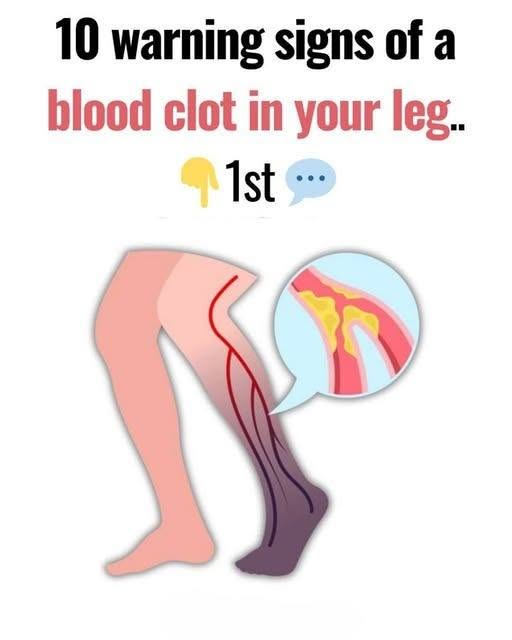
A blood clot in a deep vein of the leg is called deep vein thrombosis (DVT). It can become dangerous if part of the clot travels to the lungs (a pulmonary embolism). Knowing the warning signs can help you seek timely medical care.
Common warning signs of a blood clot in the leg
- Swelling in one leg
- Usually affects one calf or thigh rather than both legs.
- Pain or tenderness
- Often starts in the calf and may feel like a cramp, soreness, or persistent ache.
- Warm skin
- The affected area may feel noticeably warmer than the surrounding skin.
- Red or discolored skin
- The skin may appear red, bluish, or darker than usual.
- Pain when standing or walking
- The discomfort may worsen with movement or when putting weight on the leg.
- Visible surface veins
- Veins near the skin may become more noticeable or enlarged.
- A feeling of tightness or fullness
- The leg may feel unusually tight or heavy.
- Calf tenderness when touched
- Gentle pressure on the calf may be painful.
- Persistent symptoms
- Swelling or pain that does not improve with rest.
- Symptoms of a pulmonary embolism (medical emergency)
- Sudden shortness of breath
- Chest pain that may worsen with deep breathing
- Coughing up blood
- Rapid heartbeat
- Feeling faint or collapsing
Risk factors
Your risk is higher if you:
- Have been immobile for a long time (such as after surgery or on a long flight)
- Have recently had surgery or a major injury
- Are pregnant or recently gave birth
- Use estrogen-containing birth control or hormone therapy
- Have cancer
- Smoke
- Have obesity
- Have a personal or family history of blood clots
What to do
If you have one-sided leg swelling with pain, warmth, or redness, contact a healthcare provider the same day for evaluation. DVT cannot be confirmed or ruled out based on symptoms alone—an ultrasound is usually needed.
Call emergency services immediately if you develop symptoms of a pulmonary embolism, especially sudden shortness of breath, chest pain, coughing up blood, or fainting.
It’s also worth noting that not everyone with a DVT has symptoms, and some symptoms can be caused by other conditions such as a muscle strain, a Baker’s cyst, or cellulitis. A medical evaluation is the safest way to determine the cause.