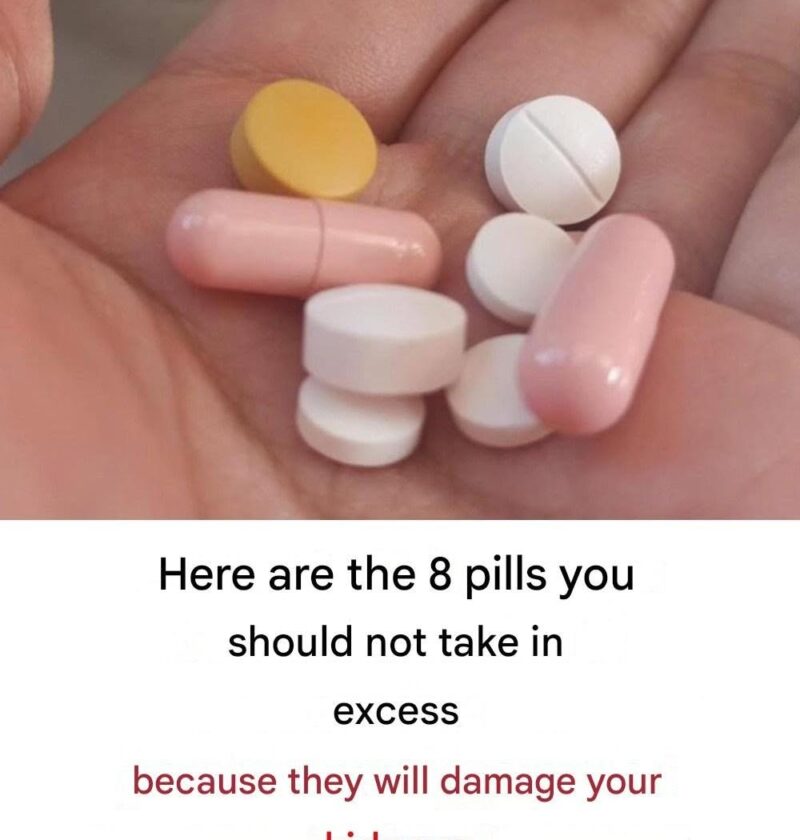
If you’re looking for a health article-style explanation behind the headline “Eight pills you shouldn’t take because they damage your kidneys,” here’s a more accurate, safety-focused version:
8 Types of Medications That Can Harm Your Kidneys (Especially When Misused)
Your kidneys filter waste and help balance fluids and minerals in your body. Some medications can stress the kidneys, particularly at high doses, with dehydration, or when combined with other drugs. This does not mean everyone should stop these medicines—many are safe and beneficial when used correctly under medical guidance.
1. Nonsteroidal anti-inflammatory drugs (NSAIDs)
Examples include ibuprofen and naproxen. Frequent or high-dose use can reduce blood flow to the kidneys and may contribute to kidney injury, especially in people with kidney disease, dehydration, or heart problems.
2. Certain antibiotics
Some antibiotics can affect kidney function in susceptible people. Doctors may adjust doses or monitor kidney tests when needed.
3. Some blood pressure medicines
Medications that affect the kidney’s blood flow or fluid balance may require monitoring, especially after starting treatment or changing doses.
4. Diuretics (“water pills”)
These help remove extra fluid but can contribute to dehydration or electrolyte changes if not properly managed.
5. Proton pump inhibitors (PPIs)
Long-term use of some acid-reducing medicines has been associated in studies with kidney-related concerns in certain populations.
6. Certain antiviral medications
Some antiviral drugs can affect kidney function and may require dose adjustments based on kidney health.
7. Some chemotherapy medicines
Certain cancer treatments can be toxic to kidney cells, so kidney function is often monitored closely.
8. Herbal or “natural” supplements
Some supplements can contain compounds that may harm kidneys or interact with medications. “Natural” does not always mean risk-free.
What you can do:
- Avoid taking painkillers regularly without medical advice.
- Drink enough fluids, especially during illness or hot weather.
- Tell your doctor about every medication and supplement you use.
- Ask whether kidney function testing is needed if you take long-term medicines.
- Never stop a prescribed medication without discussing it with your healthcare provider.
Seek medical advice promptly if you notice symptoms such as much less urine, swelling, unexplained fatigue, confusion, or severe nausea.
A medication’s risk depends on the person, dose, duration, and other health conditions—not just the name of the pill.