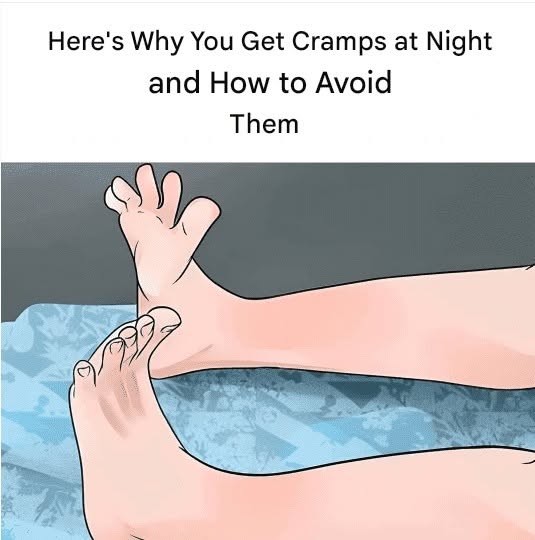
Nighttime leg cramps are sudden, painful muscle contractions, most often affecting the calf, foot, or thigh. They are common and usually not a sign of a serious illness, although frequent cramps can sometimes be related to an underlying condition.
Common causes and risk factors include:
- Muscle fatigue or overuse, especially after strenuous exercise.
- Sitting or standing for long periods.
- Dehydration may contribute in some people, though it is not the cause in every case.
- Pregnancy, particularly in the second and third trimesters.
- Older age, as cramps become more common over time.
- Certain medications, such as some diuretics (water pills), statins, or other medicines in some individuals.
- Medical conditions, including diabetes, peripheral artery disease, thyroid disorders, kidney disease, or nerve disorders.
What you can do when a cramp happens
- Gently stretch the affected muscle. For a calf cramp, straighten your leg and pull your toes toward your shin.
- Massage the muscle.
- Walk around if you can.
- Apply a warm towel or heating pad to help the muscle relax.
To help prevent cramps
- Stretch your calf and hamstring muscles before bed if you get cramps frequently.
- Stay adequately hydrated.
- Avoid overexertion and increase exercise gradually.
- Wear supportive footwear if you spend long periods standing.
When to see a healthcare professional
Seek medical advice if your cramps:
- Are frequent or severe.
- Last a long time or don’t improve with stretching.
- Are accompanied by muscle weakness, swelling, redness, or numbness.
- Begin after starting a new medication.
- Significantly interfere with your sleep or daily activities.
If you tell me:
- Where the cramps occur (calf, foot, thigh, or elsewhere),
- Your age, and
- Any medications you take,
I can help you think through the most likely causes.