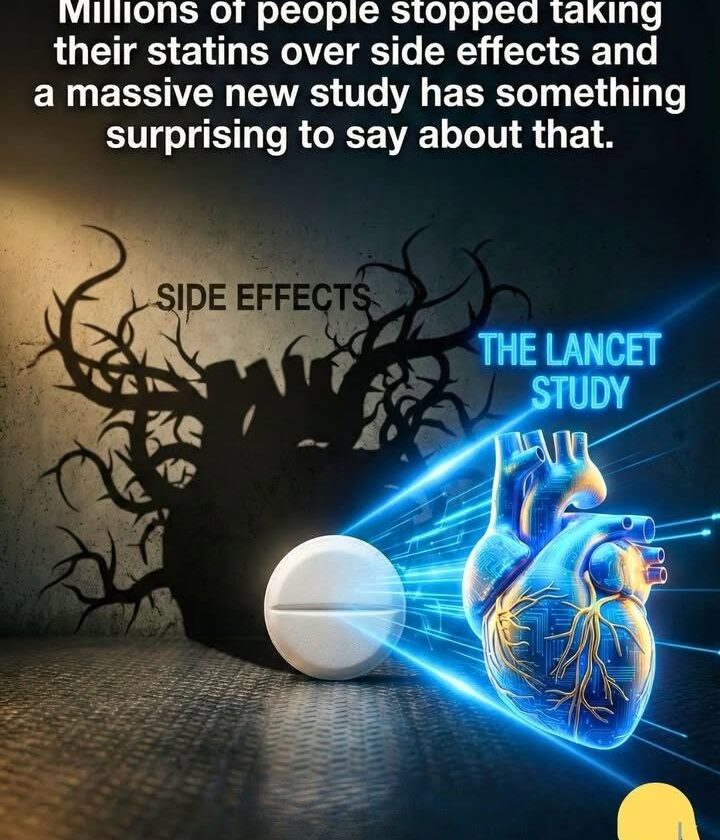
🧪 What that “150,000 patient study” likely means
Studies with very large numbers often find that:
- Many people who report side effects don’t actually experience them because of the drug itself
- A significant portion of symptoms (like muscle pain or fatigue) are also seen in people taking placebo
This is a known pattern called the “nocebo effect”:
- People expect side effects
- They notice normal body aches more
- They attribute them to the drug
In blinded trials, muscle symptoms in statin users are often similar to placebo groups, suggesting the drug is not always the cause.
🧠 What this DOESN’T mean
It does not mean:
- Side effects are fake
- No one has statin intolerance
- Everyone should ignore symptoms
A small percentage of people do have true intolerance or biochemical effects.
💊 Balanced medical reality
For Statins:
Benefits:
- Lower LDL cholesterol
- Reduce heart attack risk significantly
- Strong evidence across decades
Possible side effects:
- Muscle aches (real in some people)
- Mild liver enzyme changes (rarely clinically important)
- Very small diabetes risk increase in predisposed people
⚠️ The key issue with headlines like this
They often oversimplify:
- “Side effects are mostly imagined” ❌ (too strong)
- “Side effects are common and dangerous” ❌ (also exaggerated)
The truth is in the middle:
Most people tolerate statins well, but a minority genuinely experience side effects.
💡 Bottom line
Large studies tend to show that many reported statin side effects are not caused by the drug itself—but stopping statins without medical advice can significantly increase cardiovascular risk.
If you want, I can break down how doctors actually check true statin intolerance vs nocebo symptoms in a simple way.