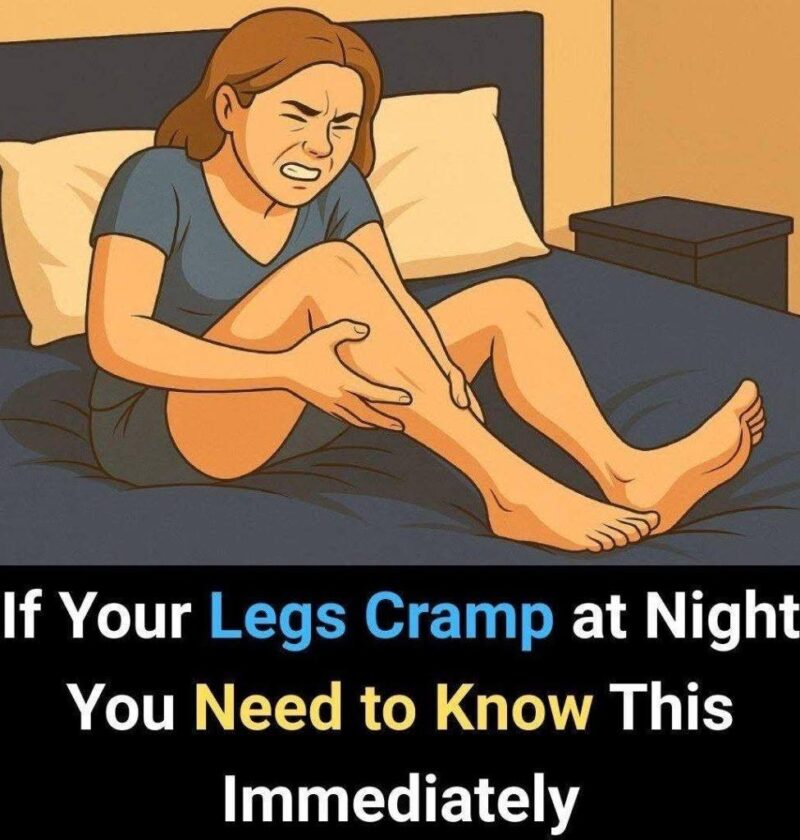
If Your Legs Cramp at Night, Here’s What You Should Know
Nighttime leg cramps—also called nocturnal leg cramps—are sudden, involuntary muscle contractions that often affect the calf, foot, or thigh. They can be painful and may wake you from sleep. While they are common, especially with age, frequent cramps may sometimes point to an underlying issue.
Common reasons legs cramp at night
1. Muscle fatigue or overuse
- Increased walking, exercise, standing for long periods, or unfamiliar activity can strain muscles.
- Tight or tired muscles are more likely to spasm.
2. Dehydration
- Not drinking enough fluids, especially after sweating, may contribute to muscle cramps.
- Maintaining normal hydration supports muscle function.
3. Mineral and electrolyte changes
Muscles rely on minerals such as:
- Potassium
- Magnesium
- Calcium
- Sodium
Low levels can sometimes contribute to cramping, although many nighttime cramps are not caused by a simple deficiency.
4. Reduced flexibility
Tight calf and leg muscles may increase the likelihood of cramps. Gentle stretching may help some people.
5. Certain medicines or health conditions
Night cramps can sometimes be associated with:
- Some diuretics (“water pills”).
- Certain cholesterol medicines.
- Nerve problems.
- Circulation issues.
- Kidney, thyroid, or metabolic conditions.
Do not stop prescribed medicines without medical advice.
What to do when a cramp happens
✅ Stretch the affected muscle
- For a calf cramp: straighten your leg and gently pull your toes toward you.
✅ Massage the muscle
- Gentle rubbing may help it relax.
✅ Apply warmth
- A warm shower, bath, or heating pad may ease tightness.
✅ Walk around
- Light movement can help the muscle release.
Ways to reduce nighttime cramps
- Stretch your calves and legs gently before bed.
- Stay active with regular, appropriate exercise.
- Drink enough fluids during the day.
- Wear supportive footwear.
- Avoid sudden increases in intense exercise.