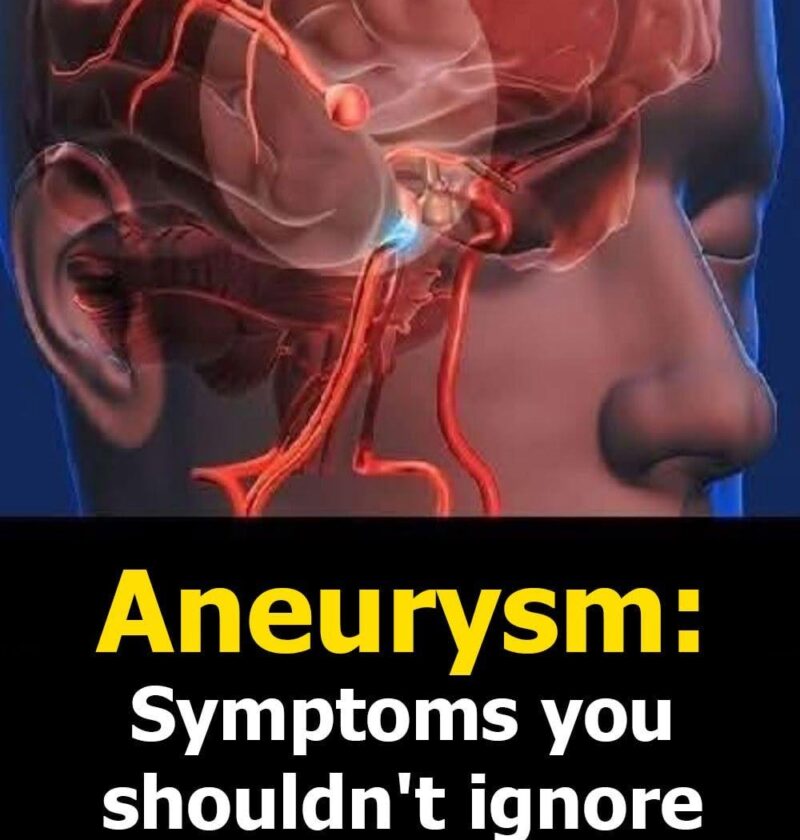
An aneurysm is a bulge in the wall of an artery. Many aneurysms cause no symptoms until they become large, leak, or rupture. The symptoms depend on where the aneurysm is located.
Possible warning signs
Brain aneurysm
- Sudden, extremely severe headache (“the worst headache of my life”)
- Nausea and vomiting
- Stiff neck
- Blurred or double vision
- Sensitivity to light
- Confusion, seizures, or loss of consciousness
Abdominal aortic aneurysm
- Deep, persistent pain in the abdomen or back
- A pulsating sensation in the abdomen
- Sudden severe abdominal or back pain if it leaks or ruptures
Thoracic (chest) aortic aneurysm
- Chest pain
- Back pain
- Shortness of breath
- Hoarseness or difficulty swallowing (if the aneurysm presses on nearby structures)
When to get emergency help
Call your local emergency services immediately if someone has:
- A sudden, severe headache unlike any they’ve had before.
- Sudden severe chest, back, or abdominal pain.
- Fainting, loss of consciousness, or signs of stroke (such as weakness on one side, trouble speaking, or facial drooping).
These symptoms can indicate a ruptured aneurysm or another life-threatening emergency.
Risk factors
Risk is higher in people who:
- Smoke or have a history of smoking.
- Have high blood pressure.
- Are older, especially men for abdominal aortic aneurysms.
- Have a family history of aneurysms.
- Have certain inherited connective tissue disorders.
Many aneurysms are found incidentally during imaging for another reason, and screening is recommended only for certain higher-risk groups.
If you’re asking because you or someone else is having sudden severe symptoms right now, seek emergency medical care immediately rather than waiting for advice online.