How to Get Rid of Milia (Those Small White Bumps)
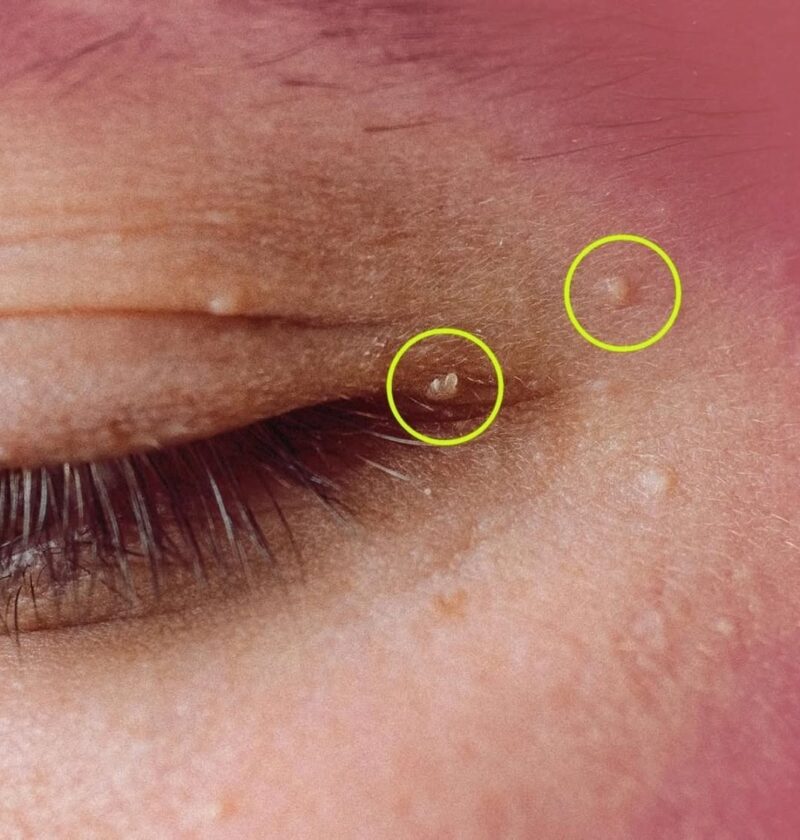
Milia are tiny, firm, white or yellowish bumps that commonly appear on the:
- Eyelids
- Cheeks
- Nose
- Forehead
Despite what you may read online, milia are not “fat cysts.” They are small cysts filled with keratin, a protein found in the skin, hair, and nails.
What Causes Milia?
Milia form when dead skin cells (keratin) become trapped just beneath the skin’s surface.
They can occur:
- Without any obvious cause (common in adults and newborns)
- After skin injuries such as burns or rashes
- Following certain cosmetic procedures
- Occasionally after using very heavy or occlusive skincare products
How to Get Rid of Milia
1. Don’t Squeeze Them
Unlike pimples, milia don’t have an opening to the skin’s surface.
Trying to pop them can:
- Damage the skin
- Cause infection
- Leave scars
2. Gentle Exfoliation
Regular, gentle exfoliation may help prevent new milia from forming.
Options include products containing:
- Alpha hydroxy acids (AHAs), such as glycolic acid
- Beta hydroxy acid (salicylic acid), if appropriate for your skin
Avoid harsh scrubbing, especially around the eyes.
3. Use a Retinoid (If Suitable)
Topical retinoids can help improve skin cell turnover and may reduce the chance of new milia developing.
They can cause irritation and are not suitable for everyone, including many people who are pregnant. Follow the product instructions and seek medical advice if you’re unsure.
4. Professional Removal
If a milium is bothersome or persistent, a dermatologist or other trained healthcare professional can remove it safely using sterile instruments.
This is a quick procedure and is much safer than attempting removal at home.
Can You Prevent Milia?
You may reduce your risk by:
- Cleansing your skin gently each day
- Removing makeup before bed
- Using non-comedogenic skincare products if you’re prone to clogged pores
- Exfoliating gently as appropriate for your skin type
- Protecting your skin from excessive sun exposure
Keep in mind that milia can still occur even with an excellent skincare routine.
When to See a Healthcare Professional
Consider seeing a doctor or dermatologist if:
- The bumps are painful, red, or inflamed.
- They spread rapidly or change in appearance.
- You’re unsure whether they are milia or another skin condition.