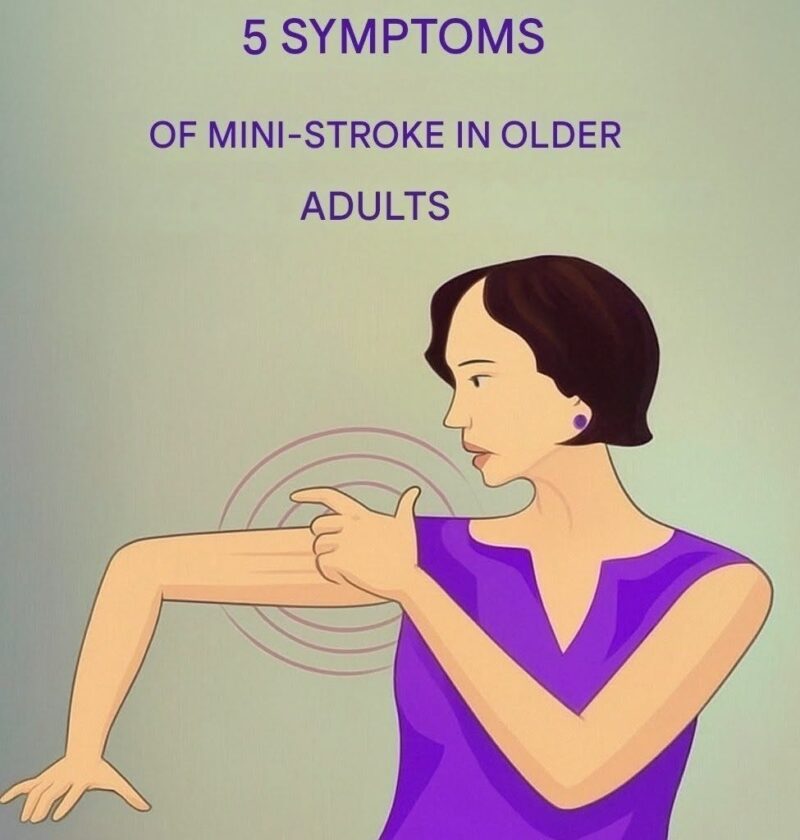
5 Symptoms of a Mini Stroke in Seniors That Shouldn’t Be Ignored
A mini stroke, also called a transient ischaemic attack (TIA), happens when blood flow to part of the brain is temporarily interrupted. The symptoms are the same as those of a stroke but usually resolve within minutes to hours and do not cause permanent brain injury.
A TIA is a medical emergency. Even if symptoms disappear completely, it can be a warning that a full stroke may occur in the near future.
1. Sudden Weakness or Numbness
A person may suddenly develop:
- Weakness in the face, arm, or leg
- Numbness, usually on one side of the body
- Difficulty lifting one arm
These symptoms often come on without warning.
2. Trouble Speaking or Understanding Speech
Someone experiencing a TIA may:
- Slur their words
- Have difficulty finding the right words
- Be unable to understand what others are saying
Speech problems that appear suddenly should always be treated as an emergency.
3. Sudden Vision Changes
A TIA can cause:
- Blurred vision
- Double vision
- Temporary loss of vision in one or both eyes
Vision changes that start suddenly need prompt medical assessment.
4. Loss of Balance or Coordination
Warning signs include:
- Sudden dizziness
- Difficulty walking
- Loss of balance
- Poor coordination
These symptoms may increase the risk of falls, particularly in older adults.
5. Sudden Confusion
A person may become:
- Confused
- Disoriented
- Unable to follow a conversation or simple instructions
Confusion that develops suddenly is different from the gradual memory decline seen in conditions such as dementia.
Remember the FAST Test
The FAST test can help you recognise a stroke or TIA:
- F – Face: Is one side of the face drooping?
- A – Arms: Can the person raise both arms, or does one drift downward?
- S – Speech: Is speech slurred or difficult to understand?
- T – Time: Call your local emergency services immediately.
Even if symptoms have gone away, urgent medical assessment is needed.
Who Is at Higher Risk?
Risk factors include:
- High blood pressure
- Diabetes
- High cholesterol
- Smoking
- An irregular heartbeat, such as atrial fibrillation
- Previous TIA or stroke
- Increasing age
Managing these conditions can significantly reduce the risk of stroke.