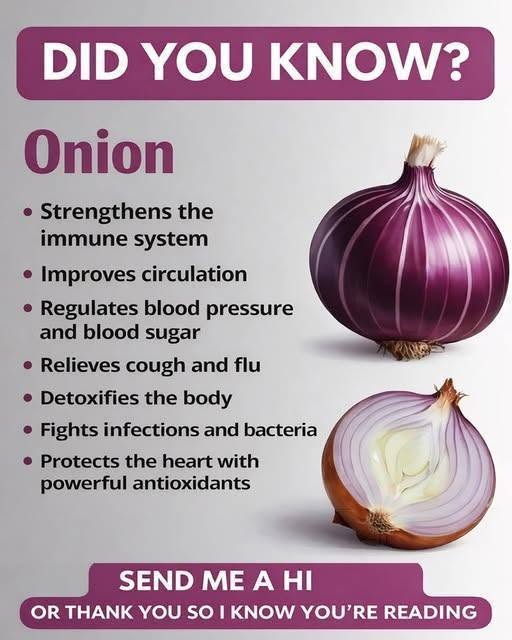
1. Rich in nutrients
Onions are low in calories but contain important nutrients such as:
- Vitamin C (supports immunity and skin health)
- Vitamin B6 (important for metabolism and brain function)
- Folate (supports cell growth)
- Potassium (helps heart and muscle function)
Even though they are usually eaten in small amounts, they still contribute useful nutrients to the diet.
2. High in antioxidants
One of the key benefits of Allium cepa is its antioxidant content, especially quercetin.
Antioxidants help:
- Protect cells from damage
- Reduce inflammation in the body
- Support long-term heart health
Red and purple onions tend to have even higher antioxidant levels than white onions.
3. May support heart health
Onions may help heart health in several ways:
- May help reduce blood pressure
- Can support healthy cholesterol levels
- Improve blood vessel function
These effects are linked mainly to their sulfur compounds and antioxidants.
4. Anti-inflammatory properties
Chronic inflammation is linked to many health problems. Compounds in onions may help:
- Reduce mild inflammation in the body
- Support immune system balance
- Potentially ease certain inflammatory conditions
However, onions are not a treatment for disease—they are supportive food only.
5. Gut health support
Onions contain prebiotics, especially inulin, which:
- Feed healthy gut bacteria
- Support digestion
- May improve overall gut balance
A healthy gut microbiome is linked to better immunity and metabolism.
6. Blood sugar support (possible benefit)
Some studies suggest that compounds in onions may:
- Help improve insulin response
- Support better blood sugar control
But they are not a replacement for medical treatment in diabetes.
7. Antibacterial properties
Traditionally, onions have been used for their natural antimicrobial effects. Modern research shows they may:
- Help inhibit some bacteria in lab studies
- Support immune defense indirectly
Still, they do not replace antibiotics or medical care.
How to eat onions for benefits
To get the most from Allium cepa:
- Eat them raw (salads) for maximum antioxidants
- Lightly cook them to preserve nutrients
- Combine with other vegetables for balanced nutrition
Possible side effects
Onions are safe for most people, but can cause:
- Gas or bloating
- Heartburn in sensitive individuals
- Eye irritation when cutting
People with IBS may need to limit intake.
Bottom line
Onions are a nutritious food with antioxidants, gut-supporting fibers, and compounds that may support heart health and reduce inflammation. However, they are not a cure for diseases—they work best as part of a balanced diet.
If you want, I can also write:
✔ Onion vs garlic health comparison
✔ Raw onion benefits vs cooked onion benefits
✔ Or top 10 superfoods with real science behind them 👍