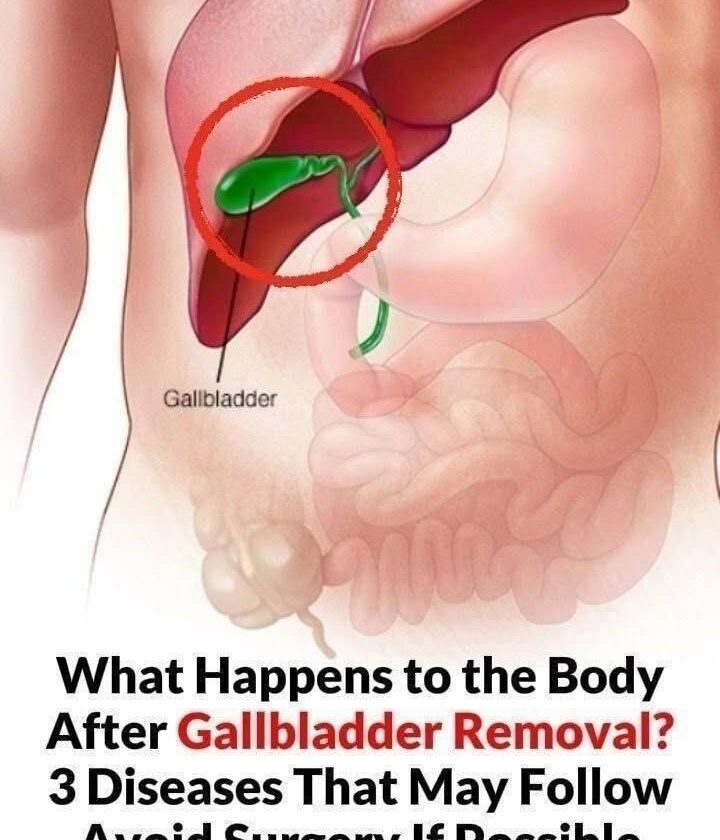
After Gallbladder Removal: 3 Conditions You Could Develop — and When Surgery Is Appropriate
The claim that you should “avoid gallbladder removal when possible” is too broad. While gallbladder removal (cholecystectomy) can have side effects and complications, it is often the recommended and safest treatment for certain gallbladder conditions, such as recurrent painful gallstones or gallbladder inflammation.
Possible conditions or symptoms after gallbladder removal
1. Diarrhea
- Some people develop frequent or loose stools after surgery because bile flows continuously into the intestine instead of being stored in the gallbladder.
- For most people, this improves within weeks or months.
- Persistent symptoms can often be managed with diet changes or medications.
2. Digestive symptoms (sometimes called post-cholecystectomy syndrome)
Some people continue to have:
- Bloating
- Gas
- Indigestion
- Upper abdominal discomfort
These symptoms may be related to the surgery or to another digestive condition that was present before surgery.
3. Bile reflux (less common)
In some cases, bile can flow into the stomach, causing:
- Upper abdominal pain
- Nausea
- Heartburn-like symptoms
This is less common than acid reflux and may require medical evaluation if symptoms are persistent.
Does everyone have problems after surgery?
No. Most people recover well and are able to eat a normal diet after a period of healing. Many have complete relief from gallstone-related pain.
When gallbladder removal is usually recommended
Doctors may recommend surgery if you have:
- Recurrent painful gallstones (biliary colic)
- Acute gallbladder inflammation (cholecystitis)
- Gallstones causing pancreatitis
- Gallstones blocking the bile ducts (often with additional procedures if needed)
In these situations, delaying surgery can increase the risk of serious complications.
Can gallstones be managed without surgery?
If gallstones are not causing symptoms, treatment is often not needed. However, once gallstones begin causing repeated pain or complications, surgery is generally the most effective long-term treatment. Medications to dissolve gallstones are only suitable for a small number of people and are less effective than surgery.
When to seek medical care
After gallbladder removal, contact your healthcare provider if you have:
- Severe or worsening abdominal pain
- Fever or chills
- Yellowing of the skin or eyes (jaundice)
- Persistent vomiting
- Ongoing diarrhea lasting several weeks