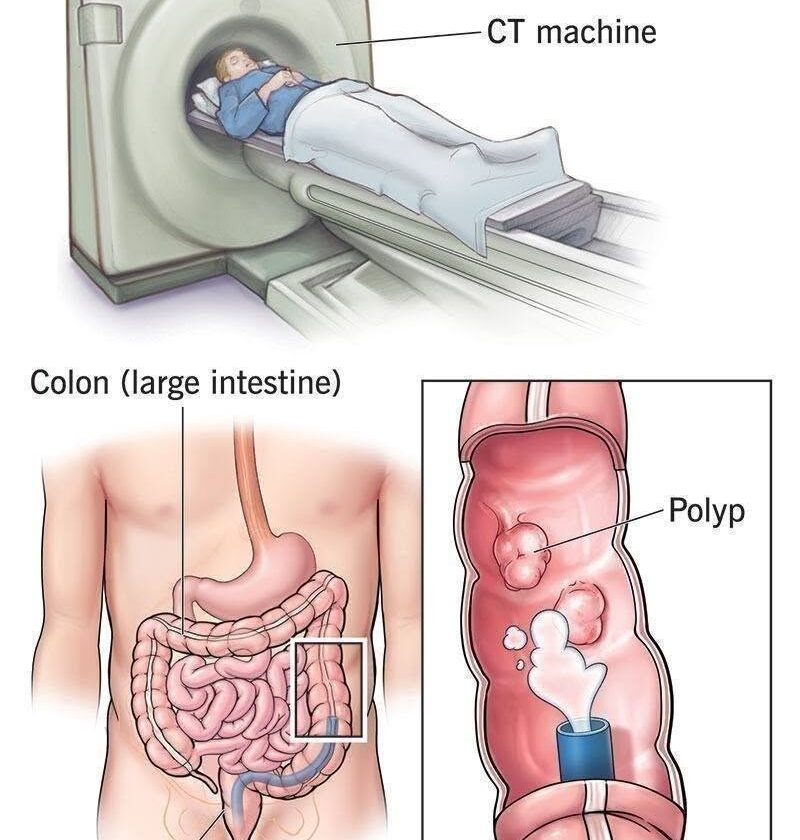
New Method: Colonoscopy Will No Longer Be an Invasive Examination? (1/2)
Headlines claiming that “colonoscopy will no longer be invasive” refer to the development of newer screening technologies, but traditional colonoscopy has not been completely replaced. Research continues on less invasive ways to examine the colon, but colonoscopy remains an important medical procedure because it can both detect problems and remove them immediately.
Why Colonoscopy Is Considered Invasive
A traditional colonoscopy involves:
- Inserting a flexible camera (colonoscope) through the rectum
- Examining the lining of the large intestine
- Removing polyps
- Taking tissue samples (biopsies) if needed
It is usually performed with sedation and requires bowel preparation.
Newer Alternatives Being Developed
1. Stool-Based Screening Tests
These tests look for warning signs such as:
- Hidden blood in stool
- DNA changes associated with colorectal cancer
Advantages:
- Done at home
- No scope insertion
Limitations:
- They cannot remove polyps.
- An abnormal result usually requires a follow-up colonoscopy.
2. CT Colonography (Virtual Colonoscopy)
This uses CT imaging to create pictures of the colon.
Advantages:
- No camera inserted into the colon
- Less invasive
Limitations:
- Bowel preparation is still usually needed.
- Polyps cannot be removed during the test.
- Follow-up colonoscopy may be needed if abnormalities are found.
3. Capsule Colonoscopy
A person swallows a small capsule containing a camera that travels through the digestive system.
Potential benefits:
- No traditional scope insertion
- More comfortable for some patients
Limitations:
- It may miss some abnormalities.
- It cannot take biopsies or remove growths.
- Availability varies by location.
4. Artificial Intelligence (AI) Assistance
AI tools are being developed to help doctors identify polyps and abnormalities during colonoscopy, potentially improving detection accuracy.
What the Future May Look Like
Future screening may involve more comfortable, non-invasive options, especially for routine checks. However, for many patients, colonoscopy remains the most complete test because it allows doctors to find, sample, and treat certain problems during the same procedure.
Bottom line: New technologies may reduce the need for some traditional colonoscopies in the future, but as of now, colonoscopy is still a key tool for colorectal cancer prevention and diagnosis.