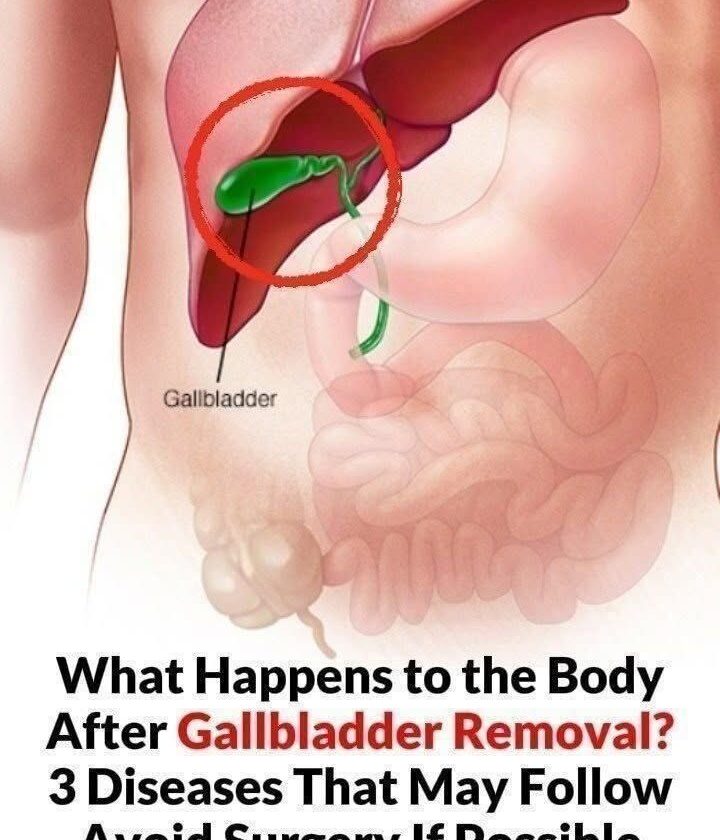
The headline “What Happens to the Body After Gallbladder Removal? 3 Diseases That May Follow – Avoid Surgery If Possible” is misleading. While gallbladder removal (cholecystectomy) can have side effects and isn’t performed unless there’s a medical reason, it is a safe and effective operation for many people with painful gallstones or other gallbladder diseases.
What happens after the gallbladder is removed?
The liver continues to produce bile, but instead of being stored in the gallbladder, bile flows directly into the small intestine. Most people digest food normally after recovery.
Possible effects after surgery
1. Digestive changes
Some people experience:
- Diarrhea
- Bloating
- Gas
- Difficulty digesting large, fatty meals
These symptoms are often temporary and improve over weeks to months.
2. Bile acid diarrhea
A small percentage of people develop persistent diarrhea because bile enters the intestine more continuously. This can often be managed with diet changes or medication.
3. Rare long-term digestive problems
Some people continue to have abdominal discomfort or indigestion after surgery, although symptoms may be due to other digestive conditions rather than the surgery itself.
Does gallbladder removal cause other diseases?
There is no strong evidence that gallbladder removal directly causes specific diseases in most people. Some studies have found associations between gallbladder removal and certain digestive or metabolic conditions, but an association does not prove that the surgery caused them. Many people needing surgery already have health factors that influence those risks.
Should surgery be avoided if possible?
Not necessarily.
Gallbladder removal is usually recommended only when the benefits outweigh the risks, such as for