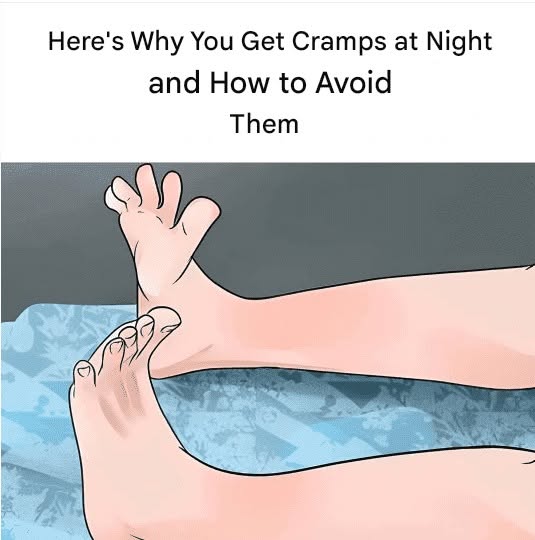
This Is Why We Get Cramps at Night
Nighttime leg cramps are sudden, involuntary muscle contractions that commonly affect the calf, foot, or thigh while you’re sleeping or resting. They can last from a few seconds to several minutes and may leave the muscle sore afterward.
1. Muscles become less active during sleep
When you’re lying still for a long time, your muscles remain in a shortened position. In some people, this may make the muscles more likely to suddenly contract.
2. Overworked muscles can become irritable
Long periods of walking, standing, exercise, or unusual physical activity during the day can increase the likelihood of cramps at night. Even activities that don’t seem particularly strenuous can contribute if your muscles aren’t accustomed to them.
3. Dehydration may play a role
Not drinking enough fluids can contribute to muscle cramping, particularly when combined with sweating or heavy physical activity. However, not every nighttime cramp is caused by dehydration.
4. Certain medications and medical conditions
Night cramps become more common with age and can sometimes be associated with medications or conditions affecting nerves, circulation, muscles, or metabolism. If cramps are frequent or suddenly become much worse, it’s worth discussing them with a healthcare professional.
5. Electrolytes aren’t always the answer
You may have heard that nighttime cramps automatically mean you need more magnesium, potassium, or calcium. That’s an oversimplification. Electrolyte deficiencies can cause muscle problems, but routine magnesium supplementation doesn’t reliably prevent ordinary nighttime leg cramps in everyone.
What to do when a cramp strikes
Try to gently stretch the affected muscle. For a calf cramp, straighten the leg and gently pull the toes toward you. Standing up and putting gentle weight on the affected leg can also help.
Afterward, gentle massage or a warm shower may help the muscle relax