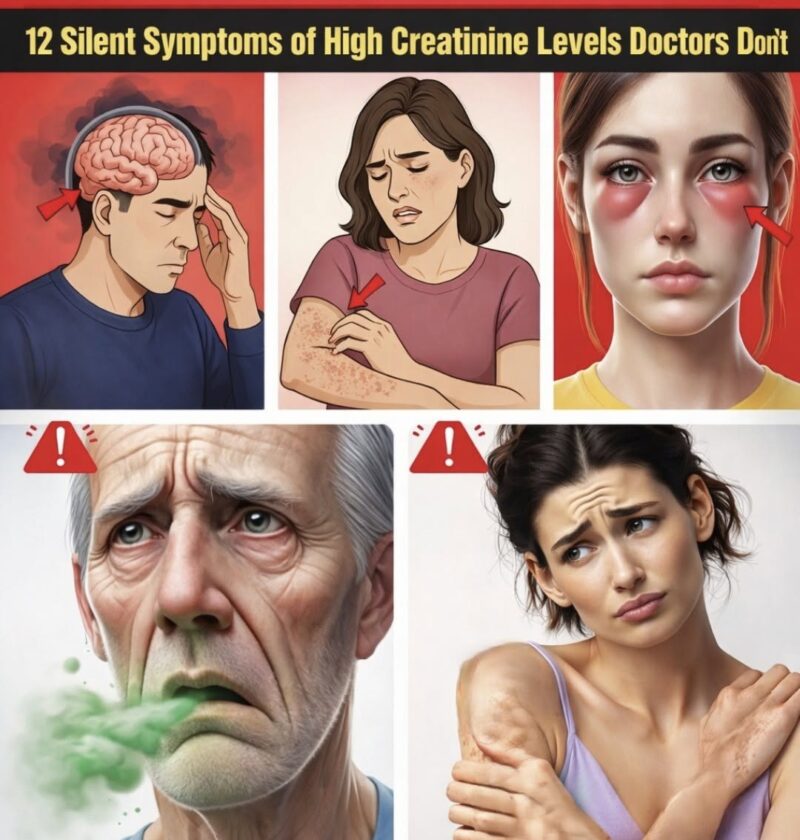
The headline “12 silent symptoms of high creatinine” is misleading. High creatinine itself usually doesn’t cause a specific set of symptoms. It is a blood-test marker that can rise when kidney filtration is impaired, but it can also be affected by factors such as muscle mass and other conditions. (National Kidney Foundation)
🩺 Possible symptoms when kidney function is significantly reduced
Early kidney disease is often silent, which is why relying on symptoms can miss it. (nhs.uk)
As kidney disease progresses, possible symptoms include:
- Unusual tiredness or weakness
- Swelling of the feet, ankles, hands, or around the eyes
- Changes in urination — more or less frequent, especially at night
- Foamy urine, which can indicate protein in the urine
- Blood in the urine
- Itchy or dry skin
- Muscle cramps
- Poor appetite
- Nausea or vomiting
- Unintentional weight loss
- Difficulty concentrating or thinking clearly
- Shortness of breath (National Kidney Foundation)
These symptoms are not specific to high creatinine and can have many other causes.
🧪 The important thing is testing
If a creatinine result is elevated, doctors generally interpret it together with eGFR, and often a urine albumin-to-creatinine ratio (uACR). These provide a much better picture of kidney health than creatinine alone. (nhs.uk)
If you have an actual creatinine and eGFR result, tell me the numbers (and your age and sex), and I can explain what they generally mean.