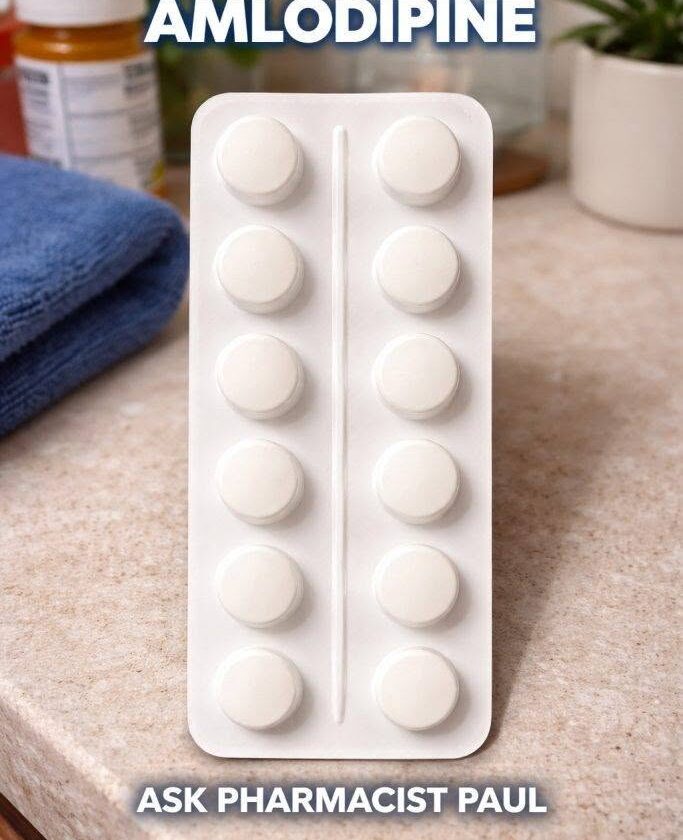
Here’s a safer, evidence-based version. I’d frame these as habits to avoid or discuss with your clinician, rather than implying amlodipine requires a special lifestyle. (nhs.uk)
⚠️ 8 HABITS TO AVOID IF YOU TAKE AMLODIPINE — AND WHY
Amlodipine is commonly prescribed for high blood pressure and angina. Most people take it safely, but a few everyday habits can make side effects or blood-pressure problems more likely.
1. 🚫 STOPPING IT SUDDENLY
Don’t stop amlodipine just because you feel better. Your blood pressure can rise again, and stopping treatment without medical advice can be dangerous. (nhs.uk)
2. 💊 DOUBLE-DOSING AFTER A MISSED TABLET
If you forget a dose, don’t take two doses together. Follow the instructions in your medication leaflet or ask your pharmacist what to do. (nhs.uk)
3. 🍷 DRINKING TOO MUCH ALCOHOL
Alcohol can increase the blood-pressure-lowering effect of amlodipine and make dizziness or light-headedness more likely. (nhs.uk)
4. 🍊 IGNORING GRAPEFRUIT WARNINGS
Some medical guidance advises avoiding grapefruit or grapefruit juice with amlodipine because it may increase side effects. Follow the instructions provided with your particular prescription and ask your pharmacist if you’re unsure. (nhs.uk)
5. 🚗 DRIVING WHEN YOU FEEL DIZZY
Dizziness and sleepiness can occur with amlodipine. If you feel affected, don’t drive or operate machinery until you feel normal again. (nhs.uk)
6. 💊 STARTING NEW MEDICINES WITHOUT CHECKING
Some medicines—including certain antibiotics, antifungals, HIV medicines, other blood-pressure medicines, and herbal products—can interact with amlodipine. Tell your doctor or pharmacist about everything you take. (nhs.uk)
7. 🩺 IGNORING PERSISTENT SWOLLEN ANKLES
Swelling of the ankles, feet, or legs is a common side effect. Don’t simply accept persistent or troublesome swelling—tell your healthcare professional, who can determine whether your treatment needs adjustment. (nhs.uk)
8. 📉 IGNORING REPEATED LOW-BLOOD-PRESSURE SYMPTOMS
If you repeatedly experience dizziness, faintness, or unusual weakness, especially after standing, talk to your healthcare professional. Your dose or other medicines may need review.
❤️ THE MOST IMPORTANT RULE
Don’t change or stop your amlodipine on your own. If you’re having side effects, your doctor or pharmacist can help determine whether they are caused by amlodipine and whether your treatment should be adjusted. (nhs.uk)
🚨 Seek urgent medical attention for severe allergic symptoms, fainting, severe chest pain, or other serious or rapidly worsening symptoms.
Amlodipine works best when taken consistently and monitored appropriately—not when you try to manage side effects yourself.