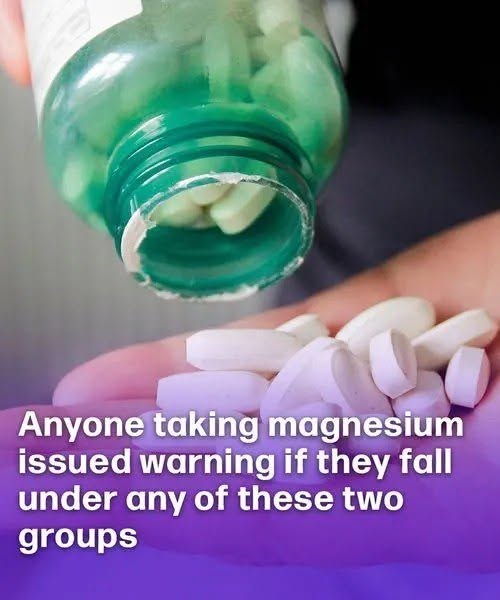
Here’s a more accurate version: the two groups needing the most caution are people with impaired kidney function and people taking certain medications. Magnesium from food is generally safe; the concern is mainly supplements and magnesium-containing medicines. (ODS)
⚠️ Health Warning About Magnesium Supplements: These 2 Groups Need Extra Caution
Magnesium is an essential mineral, but more isn’t always better. High doses from supplements or magnesium-containing medicines can cause diarrhea, nausea, and abdominal cramps—and in extreme cases, magnesium toxicity. (ODS)
🚨 1. People with kidney disease
Healthy kidneys normally remove excess magnesium from the body. When kidney function is impaired, magnesium can accumulate in the blood, increasing the risk of toxicity.
If you have kidney disease or reduced kidney function, don’t start a high-dose magnesium supplement without discussing it with your healthcare professional. (ODS)
💊 2. People taking certain medications
Magnesium can interfere with the absorption of some medicines, including certain antibiotics and oral osteoporosis medications (bisphosphonates). Some medications, such as diuretics and proton-pump inhibitors, can also affect magnesium levels. (ODS)
⚠️ How much is too much?
For adults, the U.S. tolerable upper intake level for magnesium from supplements and medications is 350 mg per day. This limit does not include magnesium naturally present in food. A healthcare professional may recommend higher amounts for specific medical reasons. (ODS)
🥬 Food is different
Magnesium-rich foods—such as nuts, seeds, beans, whole grains, and leafy green vegetables—are generally considered safe because healthy kidneys regulate excess magnesium from food. (ODS)
🚨 Seek medical attention for severe weakness, difficulty breathing, very low blood pressure, or an irregular heartbeat after taking a large amount of magnesium. These can be signs of serious toxicity. (ODS)
❤️ Bottom line: Magnesium can be beneficial when you need it, but check the dose and your medications first—especially if you have kidney problems.