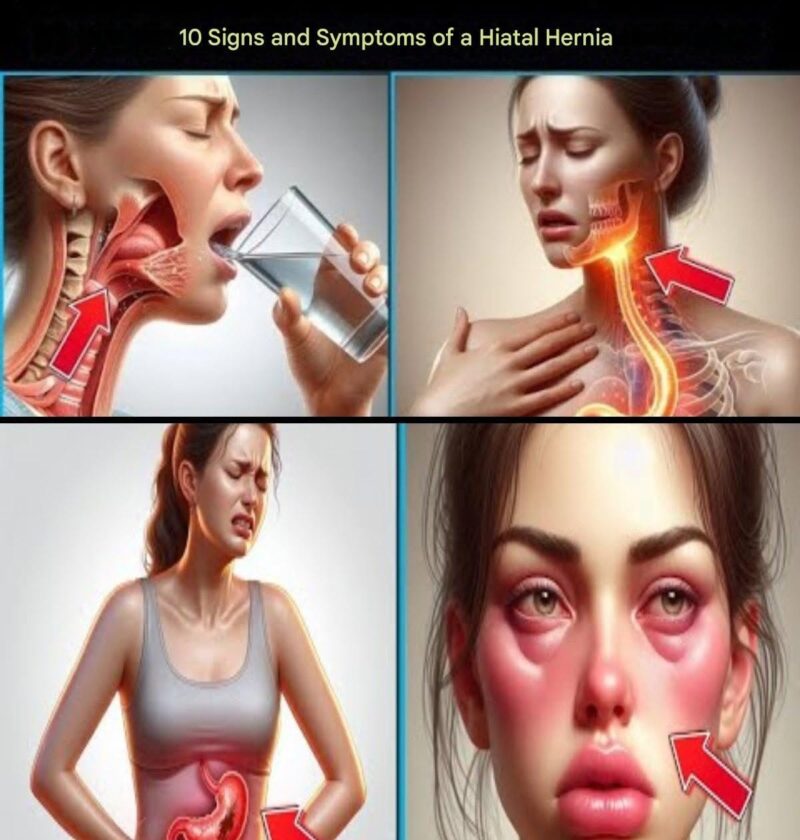
10 Signs and Symptoms of a Hiatal Hernia You Should Know
A hiatal hernia occurs when part of the stomach pushes upward through an opening in the diaphragm. Many small hiatal hernias cause no symptoms at all and are discovered incidentally. Larger hernias are more likely to cause reflux-related symptoms.
10 Possible Symptoms
- Frequent heartburn — a burning sensation behind the breastbone.
- Acid reflux — stomach acid or contents coming back toward the throat.
- Regurgitation — food or liquid returning into the mouth.
- Difficulty swallowing — food may feel as though it isn’t moving normally.
- Chest discomfort or pain — which can sometimes be confused with other conditions.
- Upper-abdominal discomfort or pain.
- Feeling unusually full after eating.
- Nausea or digestive discomfort.
- Chronic cough or hoarseness — usually related to associated reflux rather than the hernia itself.
- Shortness of breath — more likely with a large hiatal hernia.
What Can Make Symptoms Worse?
Large meals, lying down soon after eating, certain trigger foods, excess weight, smoking, and eating late can aggravate reflux symptoms. Smaller meals and avoiding lying down after eating may help.
When Should You See a Doctor?
Persistent heartburn, difficulty swallowing, ongoing chest or abdominal pain, or symptoms that don’t improve with lifestyle changes or over-the-counter treatment deserve medical evaluation. Doctors can use tests such as an upper GI X-ray, endoscopy, or esophageal manometry when appropriate.
Important: Don’t automatically assume chest pain is a hiatal hernia. Sudden or severe chest pain, particularly with shortness of breath, sweating, dizziness, or pain spreading to the arm or jaw, requires urgent medical evaluation.