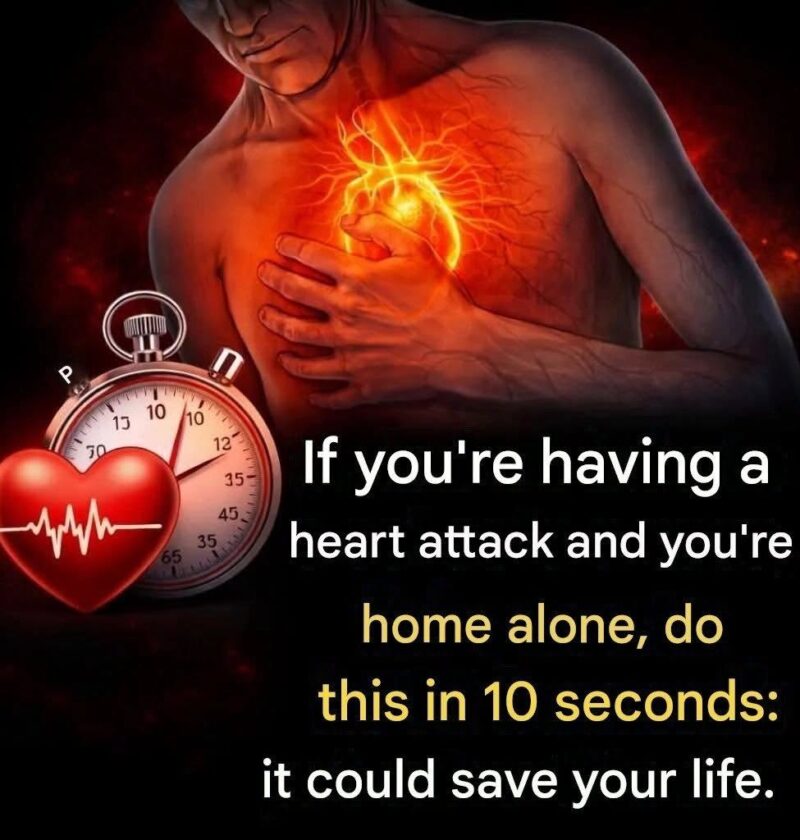
If you’re asking about the claim “If you have a heart attack at home, do this in 10 seconds and you can save your life,” be careful: there is no proven 10-second trick that can stop a heart attack.
🚨 What you should actually do
- Call your local emergency number immediately. Don’t wait to see whether the pain goes away. Getting emergency medical help quickly is the most important step. (cpr.heart.org)
- Stop what you’re doing and sit/rest in a comfortable position while waiting for help.
- If you are an alert adult with suspected heart-attack chest pain, current AHA/Red Cross guidance says you may chew and swallow 162–325 mg aspirin, unless you have an aspirin allergy or have been told by a healthcare professional not to take it. If you’re uncertain, wait for EMS rather than taking it. (cpr.heart.org)
- Do not drive yourself to the hospital if emergency medical services are available. EMS can begin treatment sooner and handle a cardiac arrest if one occurs. (cpr.heart.org)
- If you collapse and become unresponsive with abnormal or absent breathing, someone nearby should call emergency services and start hands-only CPR, pushing hard and fast in the center of the chest; use an AED if available. (cpr.heart.org)
Typical warning signs include chest pressure/discomfort, pain in the arm, back, neck or jaw, shortness of breath, sweating, nausea, or lightheadedness. (www.heart.org)
If you or someone near you is having these symptoms right now, call emergency services now rather than continuing to read.