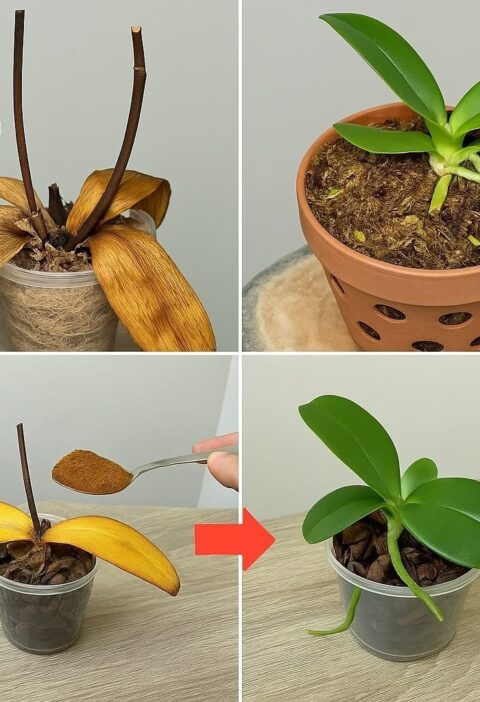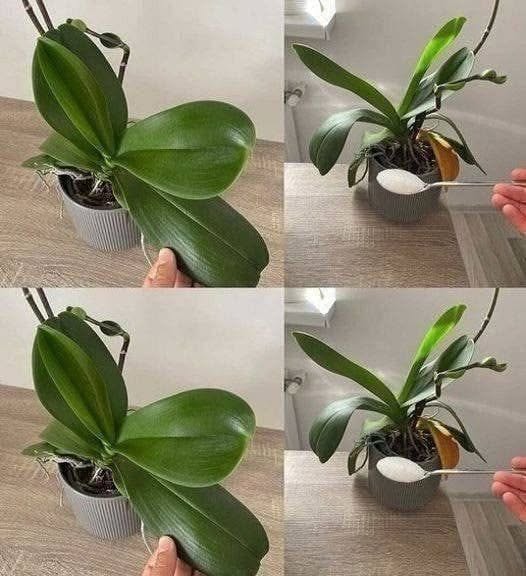
Yes—orchids generally benefit from light, regular fertilization rather than large doses. The reason is that many commonly grown orchids, especially Phalaenopsis, naturally live in environments where nutrients arrive in small amounts from rainwater, decaying organic matter, and debris rather than from rich garden soil.
🌱 Why a little fertilizer works
1. Orchid roots are sensitive to excess salts
Too much fertilizer can cause salts to accumulate around the roots, leading to root damage or “fertilizer burn.” Brown or damaged roots can follow.
2. Orchids don’t need heavy feeding
They’re relatively slow-growing plants. A dilute fertilizer supplied periodically can provide nitrogen, phosphorus, potassium and trace nutrients without overwhelming the roots.
3. Fertilizer supports new growth and flowering
Adequate nutrition helps an orchid produce healthy leaves and roots and provides resources for flowering. But more fertilizer does not necessarily mean more flowers.
🪴 A practical approach
For a typical potted Phalaenopsis:
Use a balanced orchid fertilizer.
Dilute it according to the product’s instructions; many growers use a weaker concentration rather than applying a strong dose.
Fertilize during active growth rather than continually feeding heavily.
Water thoroughly from time to time to help flush accumulated fertilizer salts.
Avoid applying concentrated fertilizer to a completely dry root system.
A common approach is “weakly, weekly”—a small amount of diluted fertilizer at regular intervals—although the exact schedule should depend on the fertilizer, orchid species, growing medium, light and season.
⚠️ Don’t make this mistake
More fertilizer won’t compensate for poor light, damaged roots, incorrect watering, or an unsuitable potting medium. If an orchid isn’t flowering, nutrition may not be the problem.
And don’t assume that fertilizer labeled specifically for orchids is always necessary; the important thing is the nutrient balance and concentration, not simply the word “orchid” on the bottle.
Bottom line: With orchids, think small amounts + consistency + good watering, rather than a large dose once in a while. Too much fertilizer can actually set the plant back.