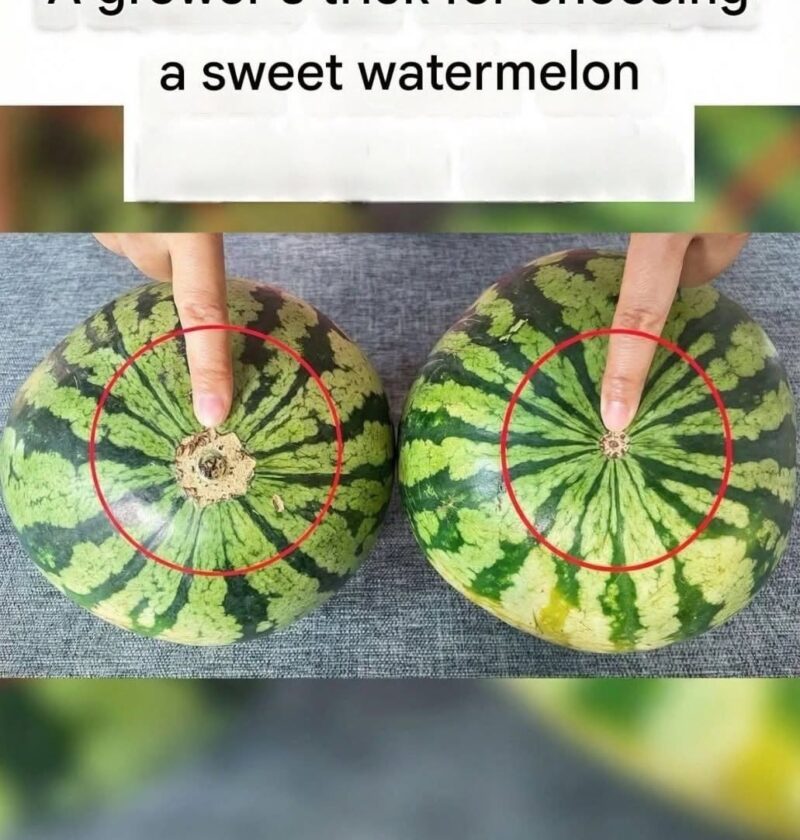
🍉 How to Pick a Sweet, Ripe Watermelon
There isn’t a 100% foolproof visual test for sweetness, because sugar content can’t be determined just by looking at the outside. But a few signs can greatly improve your odds of choosing a ripe, flavorful melon.
1. Look for a large creamy-yellow field spot
Turn the watermelon over and look for the patch where it rested on the ground.
Creamy yellow or golden: generally indicates good ripeness.
White or very pale: it may have been harvested earlier.
2. Choose a dull, rather than shiny, rind
A mature watermelon often has a duller, less glossy appearance. A very shiny green rind isn’t necessarily a bad sign, but it’s not a reliable indicator of peak ripeness.
3. Look for strong, well-defined markings
Choose a melon with clearly contrasting stripes and a healthy-looking rind, without extensive bruising, cuts, or soft areas.
4. Pick it up
A ripe watermelon should feel heavy for its size because it contains a lot of water.
Comparing several melons of similar size is particularly useful: choose the one that feels heaviest.
5. Don’t rely too much on the “tap test”
You may hear that a hollow sound means a sweeter watermelon. In reality, sound is subjective and isn’t a reliable way to measure sugar content.
6. Check the stem, if visible
A dry, brownish stem can be a useful maturity clue, whereas a very green stem may indicate the melon was harvested relatively early. But the stem can also dry out after harvest, so don’t use this sign alone.
The easiest shopping rule
Heavy + creamy-yellow field spot + intact rind = a good starting combination. 🍉
And remember: the yellow spot tells you more about maturity than sweetness itself. Actual sweetness depends on the variety, growing conditions, and when the fruit was harvested.