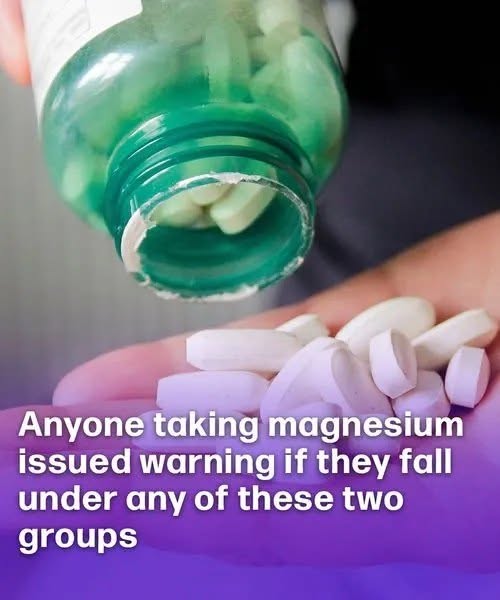
⚠️ Magnesium Supplements: Who Should Be Especially Careful?
Magnesium is an essential mineral, and getting it from foods is generally safe. The concern is high-dose supplements or magnesium-containing laxatives/antacids, particularly in people whose bodies cannot clear magnesium effectively.
O
Office of Dietary Supplements
+1
Two groups deserve particular caution:
People with kidney disease or reduced kidney function
The kidneys normally remove excess magnesium. When kidney function is impaired, magnesium can accumulate and, at very high levels, cause low blood pressure, weakness, breathing difficulties, abnormal heart rhythms, and potentially cardiac arrest.
O
Office of Dietary Supplements
+1
Older adults
Older people are more likely to have reduced kidney function, take multiple medicines, and have changes in magnesium absorption or excretion. That doesn’t mean they should avoid magnesium, but supplementation should be discussed with a healthcare professional—especially at higher doses.
O
Office of Dietary Supplements
How much is too much?
For healthy adults, the U.S. tolerable upper intake level for magnesium from supplements and medications is 350 mg per day. This limit does not include magnesium naturally present in food. Higher doses may sometimes be medically appropriate, but should be taken under professional guidance.
O
Office of Dietary Supplements
Magnesium supplements can also cause diarrhea, nausea, and abdominal cramping, and magnesium can interact with some medicines by affecting their absorption or effects.
U
U.S. Food and Drug Administration
+1
Bottom line: Don’t assume that “natural” means risk-free. If you have kidney disease, are older, or take several medications, check with your doctor or pharmacist before starting a magnesium supplement.
O
U
Sources