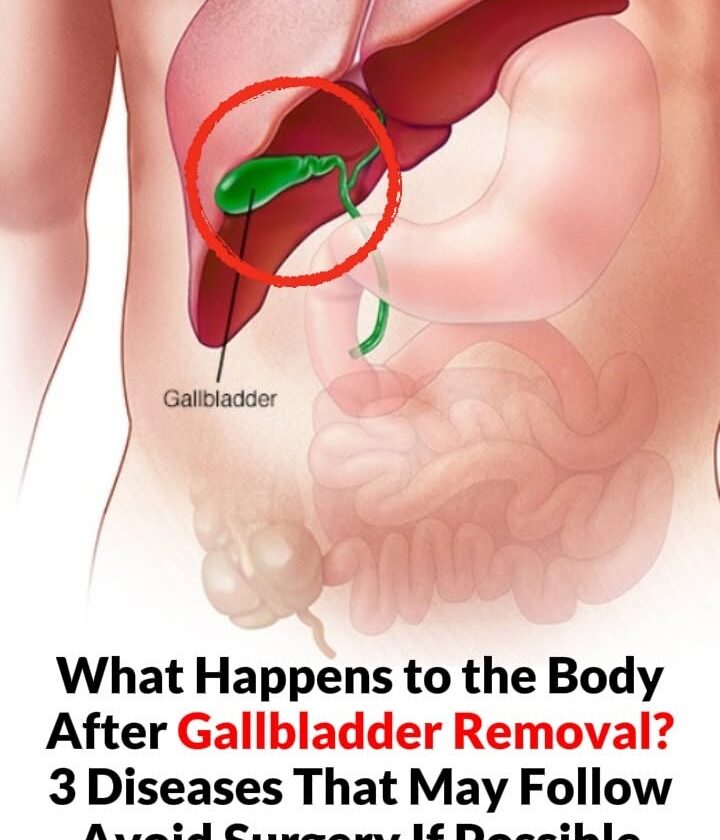
What Happens to the Body After Gallbladder Removal?
The headline “3 diseases that may follow—avoid surgery if possible” is misleading. Gallbladder removal (cholecystectomy) is a common procedure, and most people can live normally without a gallbladder. The liver continues to produce bile; after surgery, bile flows directly into the intestine instead of being stored in the gallbladder.
N
NIDDK
+1
What can happen afterward?
Some people experience:
Diarrhea or softer, more frequent stools — often temporary because bile reaches the intestine more continuously.
N
NIDDK
Bloating, indigestion or abdominal discomfort — sometimes called post-cholecystectomy syndrome. These symptoms often improve, but persistent symptoms should be evaluated.
N
nhs.uk
Difficulty tolerating certain foods — particularly fatty meals, especially during the early recovery period. Many people eventually return to a normal, healthy diet.
N
nhs.uk
+1
These are not three diseases caused by removing the gallbladder. Serious surgical complications such as bile-duct injury, bile leakage, infection, bleeding, or blood clots are possible but uncommon.
N
nhs.uk
Should you avoid surgery?
Not simply because of this type of headline. People with gallstones that cause no symptoms often don’t need treatment. But symptomatic or complicated gallstones can cause gallbladder inflammation, bile-duct infection or blockage, and pancreatitis. In those situations, surgery may prevent serious complications.
N
NIDDK
+1
So the better takeaway is: gallbladder surgery has risks, but there is no general recommendation to avoid it. The decision should depend on why surgery is being recommended, your symptoms, imaging results, and your overall health.
N
N
Sources