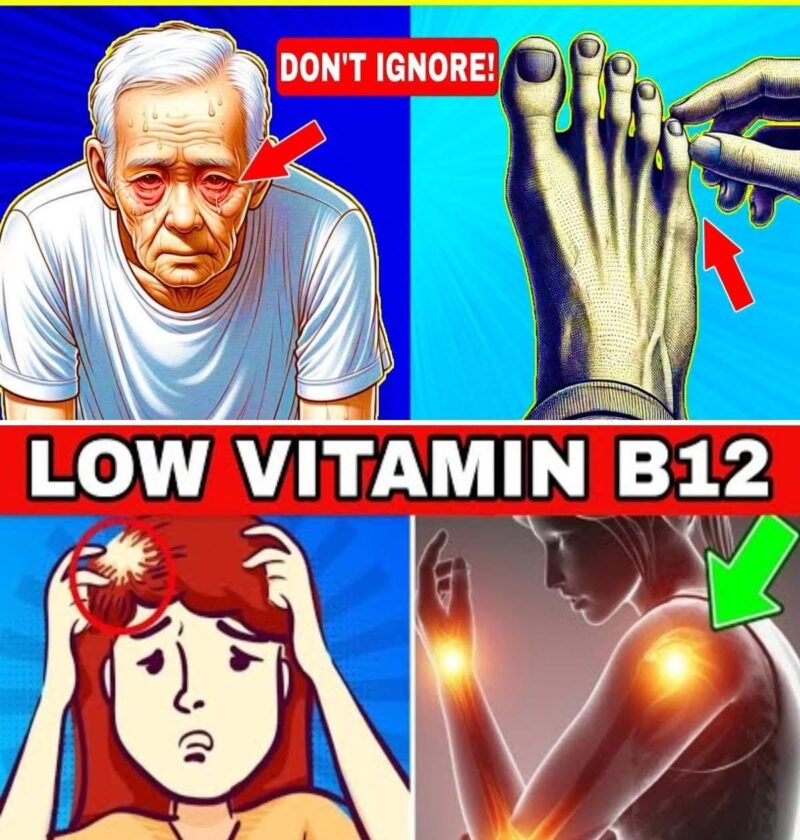
Vitamin B12 deficiency can develop gradually, and the symptoms are often mistaken for stress, aging, or other health problems. Here are 9 signs that may suggest your body isn’t getting enough vitamin B12:
1. Persistent fatigue
Feeling unusually tired or weak even after getting enough sleep can occur because B12 is needed to make healthy red blood cells.
2. Numbness or tingling
A “pins and needles” sensation in the hands, feet, or legs can result from nerve damage caused by prolonged B12 deficiency.
3. Balance or walking problems
Low B12 can affect the nervous system, leading to unsteadiness or difficulty coordinating movements.
4. Memory and concentration issues
Some people experience forgetfulness, difficulty concentrating, or mental “fog.”
5. Pale or slightly yellow skin
B12 deficiency can cause a type of anemia that makes the skin appear pale. In some cases, a mild yellowish tint may develop.
6. Shortness of breath
Reduced red blood cell production can make it harder for the body to deliver oxygen efficiently, causing breathlessness during activity.
7. Sore, red, or smooth tongue
Inflammation of the tongue (glossitis) can be an early sign of deficiency.
8. Mood changes
Low B12 levels have been associated with symptoms such as irritability, depression, or changes in mood.
9. Vision problems
In severe or prolonged deficiency, nerve damage can affect vision, causing blurriness or other visual disturbances.
Who is at higher risk?
People are more likely to develop B12 deficiency if they:
- Follow a strict vegan diet
- Have digestive disorders that affect absorption
- Have had certain stomach or intestinal surgeries
- Take long-term medications such as Metformin or acid-reducing drugs like Omeprazole
- Are older adults, since B12 absorption can decline with age
What to do if you suspect a deficiency
These symptoms can have many causes, so they do not prove that you have low B12. A healthcare professional can confirm deficiency with blood tests and recommend appropriate treatment, which may include dietary changes, oral supplements, or injections depending on the cause and severity.
Early treatment is important because some nerve-related effects of prolonged B12 deficiency can become permanent if left untreated.