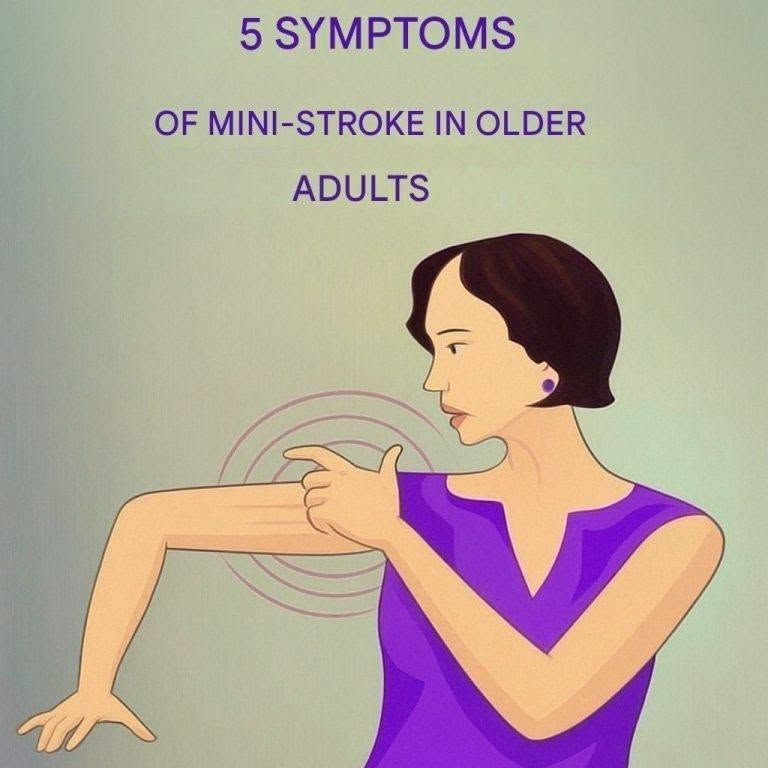
5 Symptoms of a “Mini-Stroke” in Seniors That Shouldn’t Be Ignored
A transient ischemic attack (TIA) is sometimes called a “mini-stroke” or warning stroke. Its symptoms can disappear within minutes, but that does not mean the danger is over. You cannot reliably tell at home whether symptoms are a TIA or a full stroke.
C
CDC
+1
Watch for these 5 sudden symptoms:
Face drooping or numbness — One side of the face may suddenly droop, particularly when smiling.
Weakness or numbness on one side — An arm or leg may suddenly become weak, numb, or difficult to control.
Speech or understanding problems — Sudden slurred speech, difficulty finding words, or trouble understanding others.
Sudden vision problems — Blurred, double, or lost vision in one or both eyes.
Sudden dizziness or loss of balance — Difficulty walking, severe dizziness, or loss of coordination can occur.
C
CDC
+1
A sudden severe headache with no known cause is another important stroke warning sign.
C
CDC
Don’t wait for symptoms to disappear
If any of these symptoms are happening right now—even if they have already started improving—treat it as an emergency and call your local emergency service immediately. Note the time the symptoms began, because this can help doctors determine treatment.
C
CDC
+1
A TIA can be an important warning of a subsequent stroke, with the risk particularly high soon afterward. Prompt medical assessment can identify causes and help reduce that risk.
C
CDC
+1
For seniors, don’t dismiss sudden confusion, weakness, speech difficulty, or balance problems as “just aging.” These symptoms deserve urgent evaluation.
C
Sources