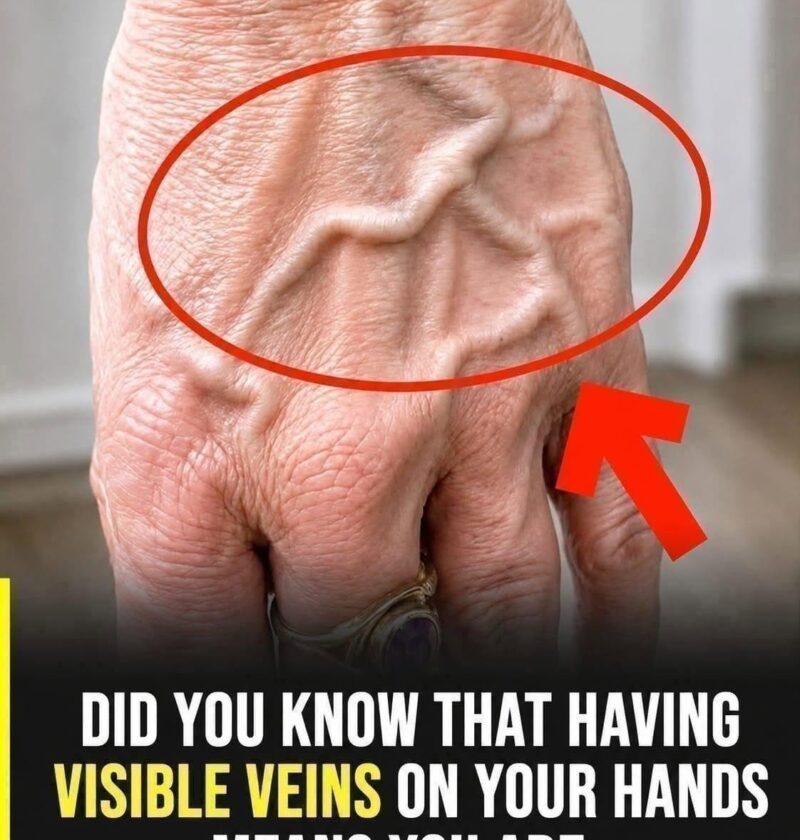
Did you know that having visible veins means you are…?
Visible veins usually aren’t a sign of disease. In many people, they simply mean the veins are close to the surface of the skin.
Common reasons include:
Lean body composition: Less fat under the skin makes veins easier to see.
Muscle development: More muscle can push superficial veins closer to the skin.
Exercise: Increased blood flow and temporary muscle “pump” can make veins more prominent.
Heat: Warm temperatures cause blood vessels near the skin to widen.
Genetics: Some people naturally have more visible veins.
Age: Skin becomes thinner with age, making veins easier to see.
Dehydration: Significant dehydration can sometimes make veins appear more prominent, but visible veins alone do not prove you’re dehydrated.
When should you pay attention?
A new, sudden, or one-sided change deserves more attention—especially if a prominent vein is accompanied by swelling, redness, warmth, pain, or a hard/tender cord under the skin.
Bottom line: If you’ve always had visible veins and feel well, they’re usually just a normal feature of your body—not evidence that you’re sick or that your blood is “too thick.”