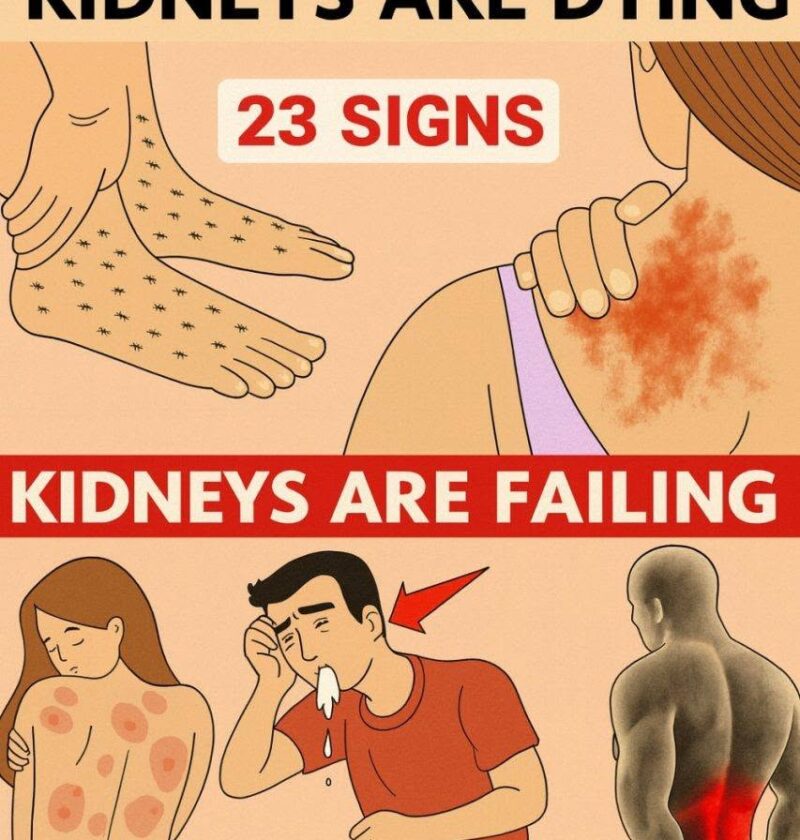
23 Strange Signs Your Kidneys Might Be in Trouble
The headline is a little misleading because early chronic kidney disease often causes no noticeable symptoms at all. Blood and urine testing is the only reliable way to detect it early.
N
NIDDK
+1
As kidney function declines, however, symptoms can appear. Possible signs include:
Unusual or persistent fatigue
Difficulty concentrating or “brain fog”
Poor sleep
Muscle cramps, particularly at night
Swollen feet, ankles, legs, hands, or around the eyes
Dry or persistently itchy skin
Foamy or unusually bubbly urine
Blood in the urine
Urinating more frequently, particularly at night
Producing much less urine than usual
Loss of appetite
Nausea
Vomiting
Unintentional weight loss
Muscle weakness
Numbness or tingling
Shortness of breath
Headaches
Changes in taste or an unpleasant/metallic taste
A urine-like or ammonia-like smell to the breath
Trouble focusing or memory problems
Feeling unusually cold
Persistent swelling or fluid retention
These symptoms are not specific to kidney disease and can have many other causes. Several—such as swelling, fatigue, itching, appetite changes, cramps, and changes in urination—are recognized symptoms of more advanced kidney disease.
N
NIDDK
+2
The most important point
Don’t wait for symptoms to appear if you’re at increased risk. Diabetes, high blood pressure, heart disease, obesity, and a family history of kidney failure increase kidney-disease risk, and being over 60 is also a risk factor.
N
NIDDK
+1
Two simple tests are particularly useful:
eGFR: a blood test estimating how well your kidneys filter blood.
Urine albumin-to-creatinine ratio (uACR): detects abnormal protein leakage into the urine.
N
NIDDK
So the real warning isn’t necessarily a “strange symptom.” Kidney disease can be progressing quietly while you feel completely normal.
N
Sources