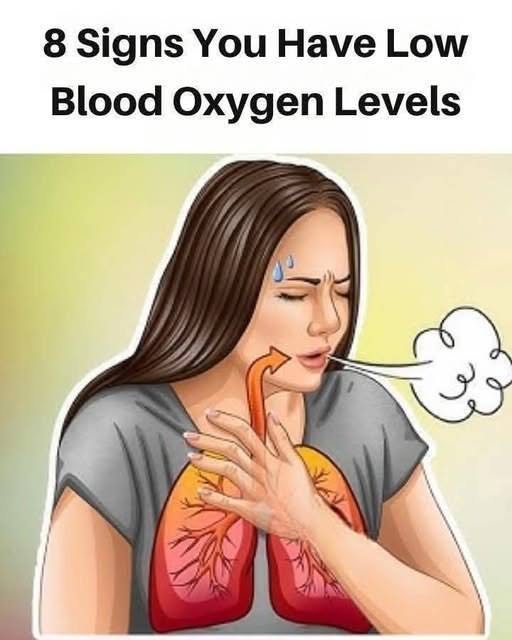
That headline is another sensational health post. Low blood oxygen (hypoxemia) is real, but it’s usually not diagnosed by vague “warning signs” alone—it’s confirmed with a pulse oximeter or blood gas test.
Still, here are the medically recognized symptoms that can happen when oxygen levels are genuinely low:
🫁 Possible signs of low blood oxygen
😮💨 1. Shortness of breath
- Feeling like you can’t get enough air
- Worse with activity or even at rest in severe cases
💙 2. Bluish lips or fingertips (cyanosis)
- Lips, nails, or skin may look blue or gray
- This is a more serious sign and needs urgent attention
😵 3. Confusion or trouble thinking clearly
- Difficulty focusing
- Drowsiness or disorientation
The brain is very sensitive to oxygen levels.
❤️ 4. Rapid heartbeat
- Heart tries to compensate by pumping faster
- May feel like palpitations
😴 5. Unusual fatigue or weakness
- Feeling exhausted even with minimal activity
- Reduced exercise tolerance
😮💨 6. Fast breathing
- Breathing becomes quicker or more shallow
- Feeling like you’re “working hard” to breathe
📉 Important reality check
These symptoms are not specific to low oxygen alone. They can also occur with:
- anxiety or panic attacks
- infections (like pneumonia)
- asthma or COPD
- anemia
- heart conditions
That’s why symptoms alone are not enough for diagnosis.
🩺 How low oxygen is actually confirmed
Doctors use:
- Pulse oximeter (SpO₂) → normal is usually 95–100%
- Blood gas tests in hospitals
Persistent readings below ~92% (at rest) are usually concerning, depending on the person.
🚨 When to seek urgent care
Get medical help immediately if there is:
- severe shortness of breath
- chest pain
- confusion
- bluish lips or face
- oxygen saturation very low on a monitor
🧠 Bottom line
Low oxygen is serious, but viral “6 warning signs” lists often mix true symptoms with very general ones. The most reliable indicator is still measurement, not guesswork.
If you want, I can also explain normal oxygen levels vs mild vs severe hypoxia in a simple chart so it’s easier to interpret readings.