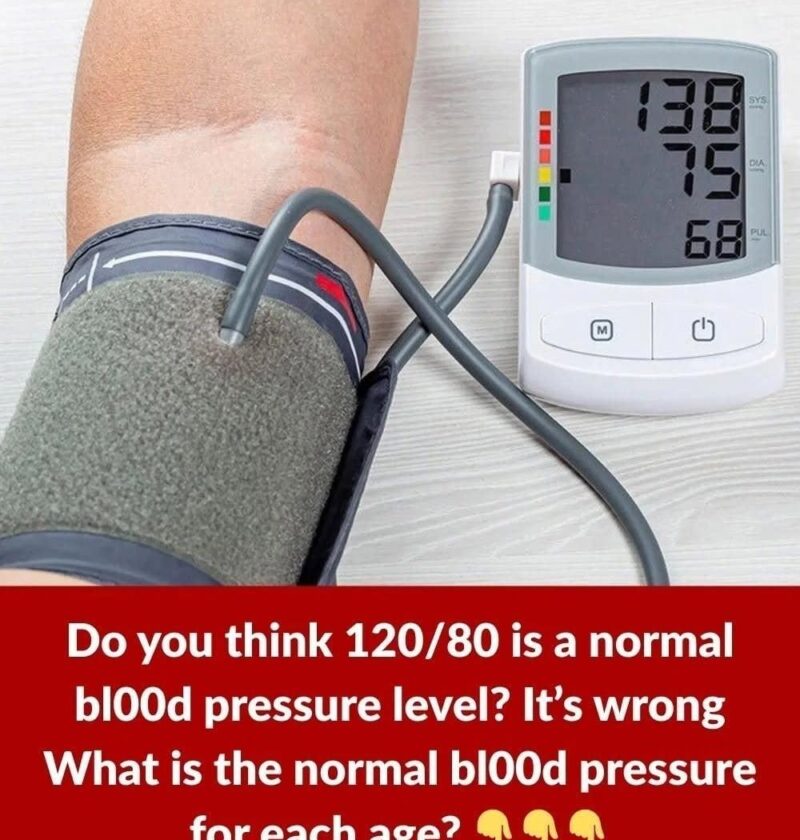
“Normal blood pressure” doesn’t really change by age in adults—the medical goal is mostly the same across adulthood. What does change is how likely it is to rise with age.
Here’s a clear breakdown.
🩺 Standard “normal” blood pressure (adults)
For most adults, regardless of age:
- Normal: less than 120/80 mmHg
- Elevated: 120–129 / less than 80
- High blood pressure (Stage 1): 130–139 / 80–89
- High blood pressure (Stage 2): 140+ / 90+
- Crisis: 180+ / 120+ (seek urgent care)
👶 Children & teens (varies by height/age)
In kids, “normal” depends on age, sex, and height percentile, but rough ranges are:
- Newborns: ~60–90 / 20–60
- Toddlers: ~80–100 / 50–70
- School-age children: ~90–110 / 55–75
- Teens: close to adult range (~110–120 / 70–80)
Doctors use special growth charts rather than fixed numbers.
👨🦳 Older adults
Even though blood pressure tends to rise with age, targets are still generally:
- Ideal: under 120/80 (if tolerated)
- Common treatment goal: under 130/80 (especially if diabetic or high risk)
Some older adults may have slightly higher “acceptable” targets depending on frailty or dizziness risk, but this is individualized by a doctor.
🧠 Key takeaway
- There is no “normal BP per age” chart for adults that replaces the standard target
- The healthiest goal for most people remains: below 120/80 mmHg
- Treatment goals may be adjusted based on overall health, not age alone
⚠️ When to worry
- Consistently above 130/80 → worth lifestyle changes or medical advice
- Above 140/90 → usually considered hypertension
- Above 180/120 → emergency range
If you want, I can also explain:
- how to accurately measure blood pressure at home
- or foods and habits that lower BP naturally