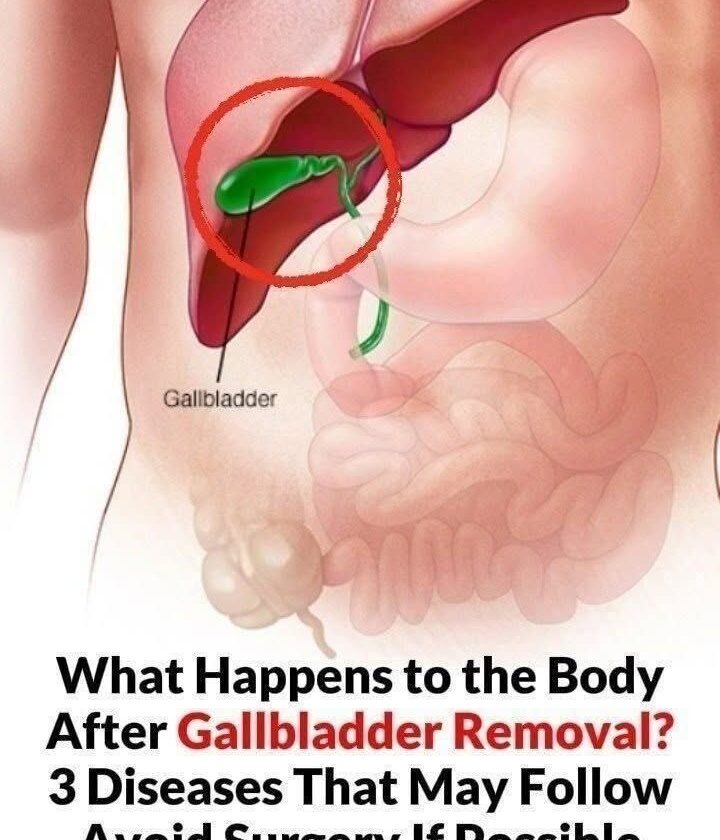
🩺 First: What is gallbladder removal?
Gallbladder removal surgery, called Cholecystectomy, is one of the most common operations worldwide. It’s typically performed for:
- Painful gallstones
- Repeated gallbladder inflammation
- Certain complications such as infection or pancreatitis
For many patients, the benefits clearly outweigh the risks.
⚠️ Possible conditions or symptoms after gallbladder removal
1. Digestive changes and diarrhea
Without a gallbladder, bile flows continuously into the intestine rather than being stored and released during meals.
Some people develop:
- Loose stools
- Urgent bowel movements
- Difficulty tolerating very fatty meals
For most patients, these symptoms are mild or improve over time.
2. Bile reflux
A small number of people may experience bile flowing backward into the stomach, which can cause:
- Upper abdominal discomfort
- Nausea
- Heartburn-like symptoms
This is much less common than internet articles often suggest.
3. Post-cholecystectomy syndrome
Some patients continue to have abdominal symptoms after surgery. This can include:
- Bloating
- Indigestion
- Abdominal pain
In some cases, the symptoms are due to another digestive condition that existed before the operation.
🚫 Why “avoid the surgery when possible” is misleading
In some situations, doctors may recommend monitoring rather than surgery—for example, if gallstones are present but causing no symptoms.
However, when surgery is recommended because of repeated attacks, inflammation, infection, or complications, delaying treatment can lead to serious problems such as:
- Gallbladder infection
- Blocked bile ducts
- Pancreatitis
- Emergency surgery
The decision depends on the individual patient’s condition, not a blanket rule.
✅ What most people experience
Most patients:
- Recover fully
- Eat a normal diet
- Live healthy lives without a gallbladder
The liver continues to produce bile; the body simply stores it differently.
⚖️ Bottom line
- ✔️ Gallbladder removal can cause digestive changes in some people.
- ✔️ A small percentage develop ongoing symptoms that require management.
- ❌ The existence of these risks does not mean people should generally avoid the surgery.
- ✔️ The right choice depends on the severity of the gallbladder disease and a physician’s recommendation.
If you have a specific article, video, or claim you’re evaluating, I can help separate the medically accurate parts from the exaggeration.