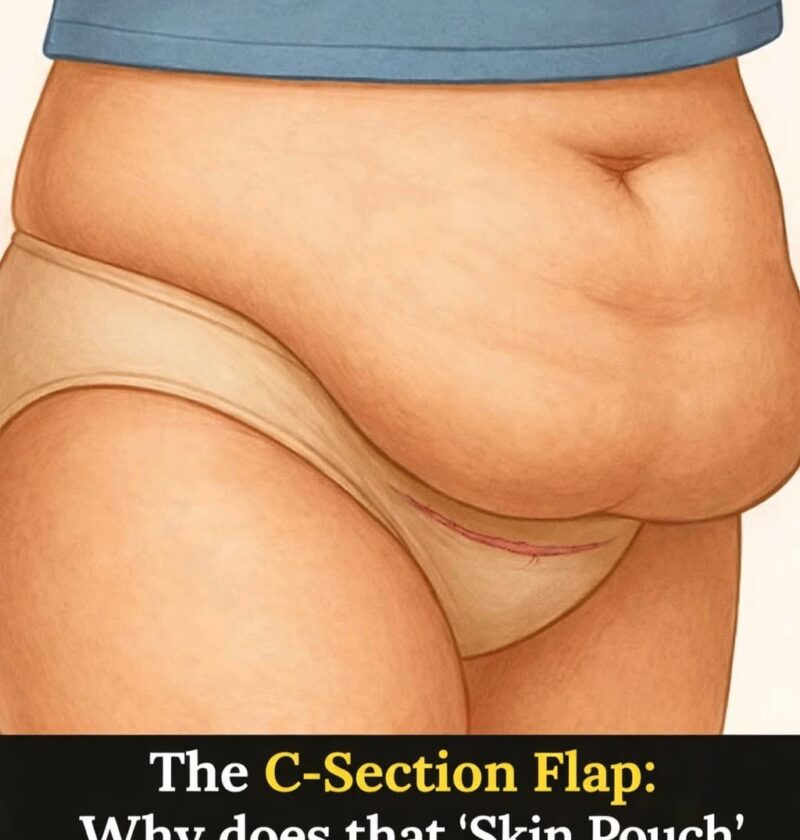
That “bag of skin” people sometimes notice after a C-section isn’t a separate structure created by surgery. It’s usually a mix of normal healing changes in the lower abdomen that can become more visible after pregnancy and delivery.
🩺 What people are actually seeing
After a Cesarean delivery (C-section), the lower abdomen may have:
- Loose skin from pregnancy stretching
- A small fat pad that shifts downward
- Scar tissue pulling the skin slightly inward
- Weakening of abdominal muscles (especially the deep core)
This combination can create what some call a “C-section flap” or “pouch.”
✂️ What the surgery actually does
A C-section involves an incision through:
- Skin
- Fat layer
- Abdominal wall
- Uterus
Cesarean Section
The incision is typically horizontal and low on the abdomen, and after healing it forms a scar line, not a pocket of skin.
🤰 Why the “flap” happens
1. Skin elasticity changes
Pregnancy stretches the skin; after delivery it may not fully retract.
2. Muscle separation (diastasis recti)
The abdominal muscles can separate during pregnancy, leaving less support for the belly.
3. Scar adhesion
Internal healing can cause slight tethering of tissue near the scar, changing how the skin sits.
4. Fat redistribution
Hormonal changes can shift fat storage toward the lower abdomen.
⚠️ Important clarification
- It is not dangerous tissue
- It is not “leftover surgery skin”
- It is a normal postpartum body change in many women
💡 What can help reduce its appearance
- Core rehabilitation (especially deep abdominal muscles)
- Postpartum physiotherapy
- Gradual weight management if needed
- Time (skin can continue improving for 12–24 months postpartum)
In some cases:
- Laser therapy or scar treatment may improve texture
- Surgery (like abdominoplasty) is optional, not medically required
🧠 Bottom line
The “C-section flap” is not something left behind by surgery—it’s the combined result of skin stretching, muscle changes, and healing patterns after pregnancy.
If you want, I can explain:
- how to check for diastasis recti at home
- or a safe postpartum exercise plan to tighten the lower belly area without risking injury