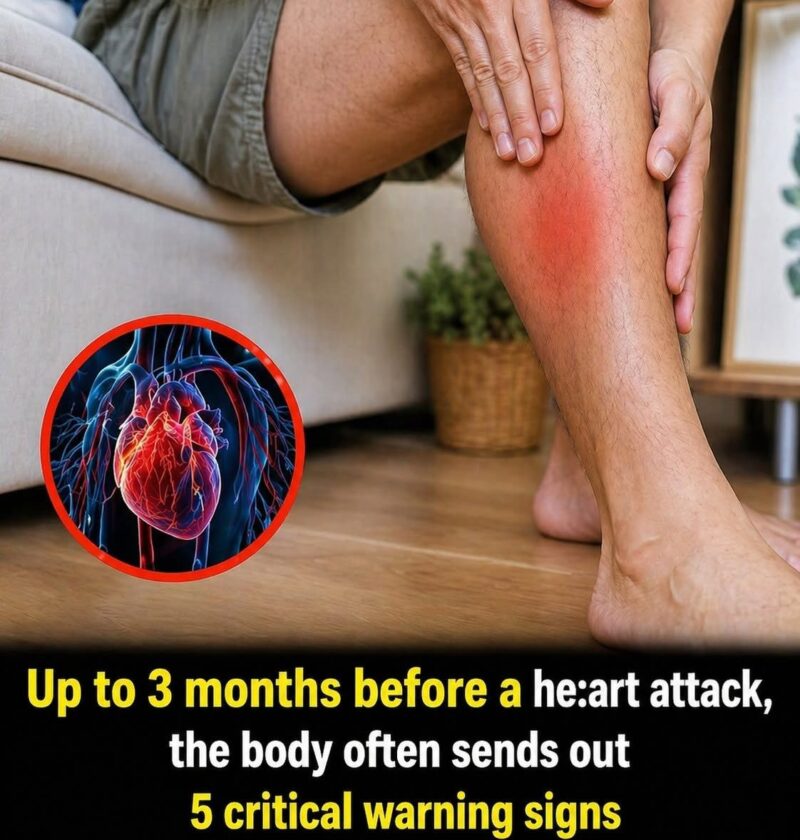
That headline is partly based on real warning signs, but it’s also over-simplified and often exaggerated online.
A true heart attack (myocardial infarction) can sometimes be preceded by symptoms days to weeks earlier—especially in people with underlying heart disease—but there is no reliable rule that symptoms appear exactly 3 months in advance.
A heart attack involves the condition Myocardial Infarction, usually caused by reduced blood flow to the heart muscle.
Common early warning symptoms (can occur weeks to months before in some people)
1. Chest discomfort (angina)
- Pressure, tightness, or heaviness in the chest
- May come and go, especially during physical activity or stress
2. Unusual fatigue
- Feeling extremely tired after normal activities
- More common in women and older adults
3. Shortness of breath
- Difficulty breathing with minimal exertion or even at rest
4. Pain spreading to other areas
- Discomfort in the arm, shoulder, neck, jaw, or back
- May be mild or intermittent
5. Sleep disturbances or anxiety-like symptoms
- Trouble sleeping
- Feeling “something is wrong” without clear reason
Important: sudden emergency symptoms
A heart attack often happens without long warning. Seek emergency care immediately if you have:
- Severe or persistent chest pain/pressure
- Sweating, nausea, or vomiting
- Sudden shortness of breath
- Fainting or extreme weakness
Who is at higher risk?
People with:
- High blood pressure
- Diabetes
- High cholesterol
- Smoking history
- Obesity
- Family history of heart disease
Key takeaway
Some people do experience early warning symptoms, but:
- They are not specific
- They can be mistaken for stress, indigestion, or fatigue
- A heart attack can also occur suddenly without warning
If you want, I can break down how to tell the difference between heart-related chest pain and gas/acid reflux, which is one of the most confusing issues for people.