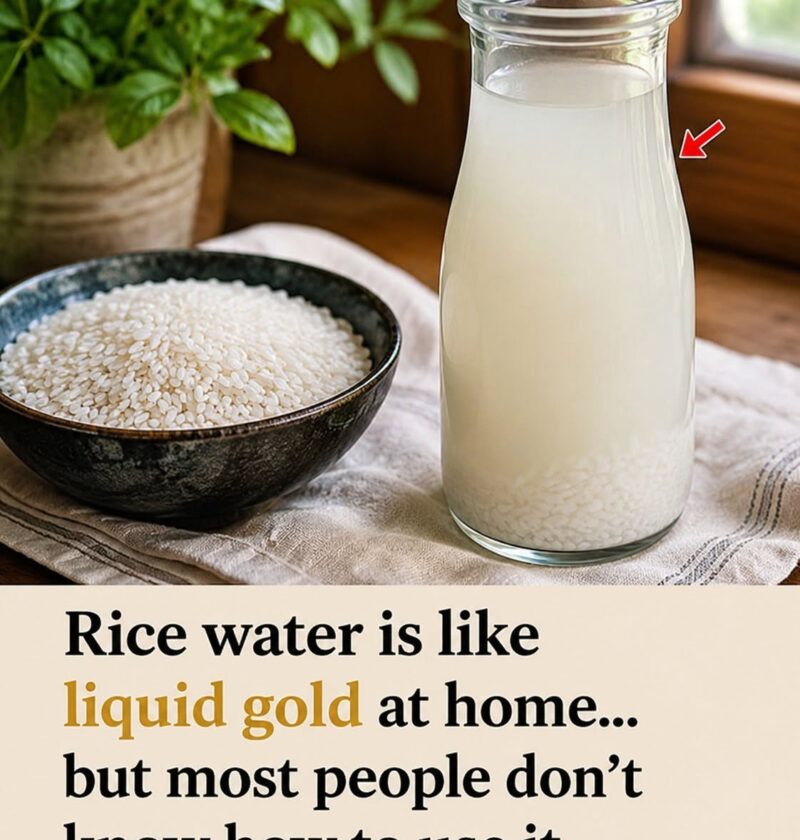
That claim is an exaggeration. Rice water—the starchy water left after soaking or cooking rice—can be useful in some situations, but it isn’t “liquid gold” and it doesn’t have proven miracle health or beauty effects.
Common uses of rice water
🌱 For plants
Some gardeners use diluted rice water occasionally because it contains small amounts of starches and trace nutrients. However:
- It is not a complete fertilizer.
- Excess use can encourage mold, odors, or pests.
- It’s best used sparingly.
💇 For hair
Rice water is popular in hair-care routines because it contains starch and compounds such as inositol.
- Some people report smoother-feeling hair and less breakage.
- Scientific evidence for dramatic hair growth is limited.
🧴 For skin
Some people use rice water as a gentle rinse or toner.
- It may temporarily soothe or soften skin.
- Evidence for treating acne, wrinkles, or skin diseases is limited.
What rice water does not do
Be skeptical of claims that it:
- Cures diabetes
- Lowers blood pressure dramatically
- Reverses aging
- Causes rapid hair growth
- Replaces fertilizers or medications
Simple rice water recipe
- Rinse ½ cup of rice.
- Add 2–3 cups of water.
- Let sit for 15–30 minutes.
- Strain the liquid.
For cosmetic use, store it in the refrigerator and use it within a few days.
Bottom line
Rice water is a useful household by-product with some practical uses, but claims that it’s a hidden miracle remedy are not supported by strong scientific evidence. It’s best viewed as a simple home ingredient rather than a cure-all.