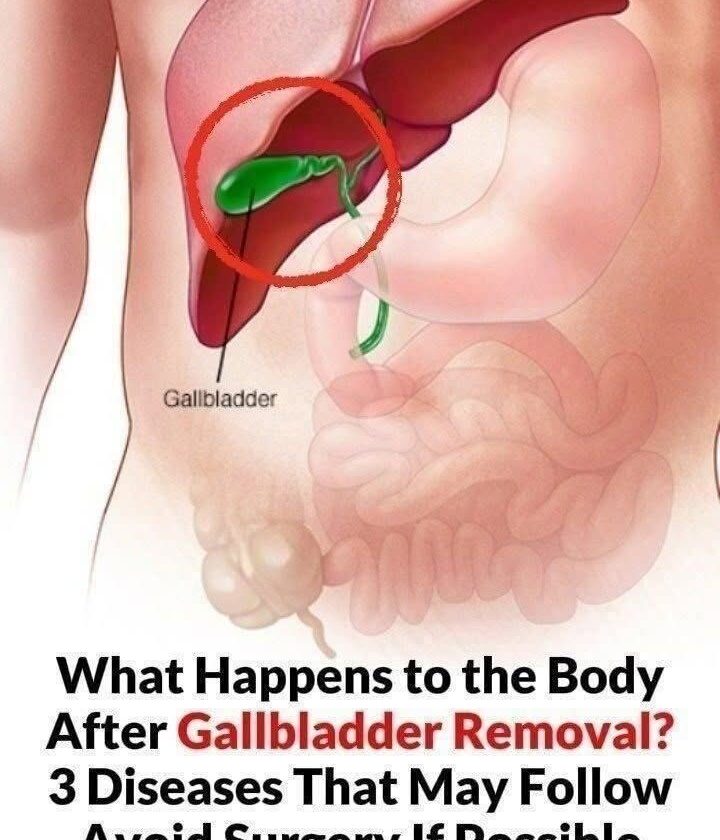
Millions of people have this surgery every year for gallstones, infection, or gallbladder inflammation, and for most, it significantly improves quality of life. It is not something doctors recommend “casually”—it’s usually done when leaving the gallbladder in place is riskier than removing it.
That said, there are some possible long-term digestive changes or complications after surgery. The idea that you should “avoid surgery when possible” is misleading unless your condition is mild and truly manageable without it.
Here are 3 real conditions or issues that can occur after gallbladder removal:
1. Post-cholecystectomy syndrome
Some people continue to have symptoms like abdominal pain, bloating, nausea, or indigestion even after surgery. This doesn’t always mean something is “wrong”—sometimes it’s related to bile flow changes or another underlying digestive issue that wasn’t caused by the gallbladder alone.
2. Bile acid diarrhea
Without a gallbladder, bile flows continuously into the intestine instead of being stored and released in controlled amounts. In some people, this can irritate the bowel and lead to frequent loose stools or urgency, especially after fatty meals. This is treatable in many cases with medication that binds bile acids.
3. Sphincter of Oddi dysfunction (less common)
A small number of patients develop pain due to abnormal tightening of the bile duct valve (the sphincter of Oddi). This can mimic gallbladder pain, though it’s far less common than social media makes it seem.
Important reality check
- Most people do NOT develop serious long-term problems
- The majority return to normal life after recovery
- Untreated gallbladder disease can cause far more dangerous complications (infection, bile duct blockage, pancreatitis)
So the more accurate statement is:
Gallbladder removal can cause digestive changes in some people, but for many patients it prevents more serious and immediate health risks.
If you want, I can explain when doctors actually recommend surgery vs when they try to avoid it, because that’s where most of the confusion comes from.