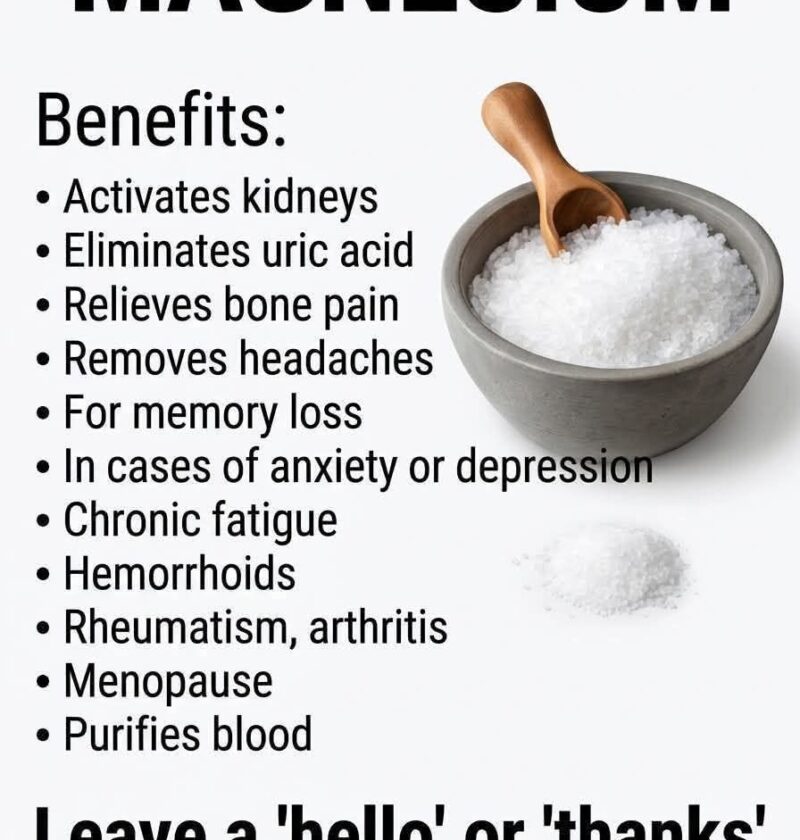
That “Why Chinese doctors recommend…” phrasing is another clickbait setup. It usually leads to a simple supplement being presented as if it’s a secret cure-all.
In reality, magnesium is widely recommended by doctors everywhere (not just in China) in specific situations—but not as a universal remedy.
Why magnesium is actually used medically
Magnesium is an essential mineral involved in:
- muscle and nerve function
- heart rhythm regulation
- blood pressure control
- energy production
- bone health
Doctors may recommend magnesium if someone has:
- confirmed magnesium deficiency
- muscle cramps or spasms
- migraine prevention (in some cases)
- constipation (certain forms like magnesium citrate)
- sleep issues (limited evidence, sometimes used supportively)
What’s exaggerated online
Posts often claim magnesium:
- cures anxiety
- fixes insomnia completely
- heals pain, nerves, bones, and mood disorders
These claims are overstated. Evidence shows:
- it may support sleep or relaxation in some people
- it is not a cure for depression, chronic pain, or neurological disease
Important safety note
- Too much magnesium (especially supplements) can cause diarrhea, low blood pressure, and heart rhythm problems in severe overdose
- People with kidney disease need medical supervision
Bottom line
Magnesium is real and useful—but it’s a support nutrient, not a miracle treatment, and it’s recommended by doctors globally when there’s a reason.
If you want, I can break down whether magnesium would actually help your specific concern (sleep, anxiety, cramps, etc.) based on evidence.