That headline is another exaggeration (“everyone has made this mistake”). Blood pressure targets are not different for every age in a simple step-by-step way. Instead, doctors use mostly standard ranges for adults, with some adjustments for children and individual health conditions.
Here is a clear, medically accurate guide:
What is “normal” blood pressure?
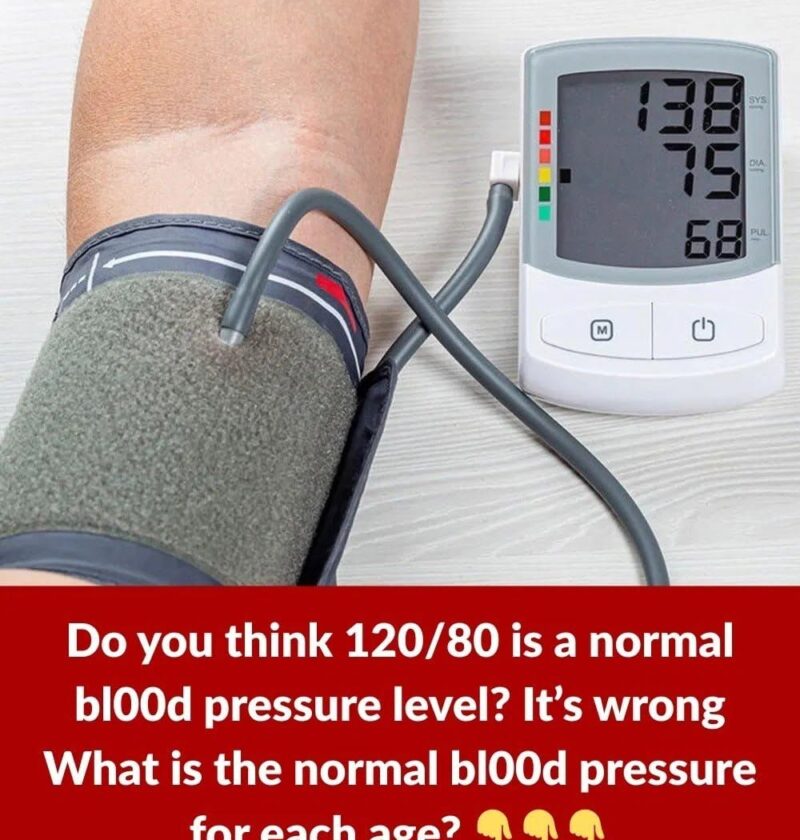
Blood pressure is written like 120/80 mmHg:
- First number = systolic (pressure when heart beats)
- Second number = diastolic (pressure when heart rests)
For most adults:
- Normal: less than 120/80 mmHg
- Elevated: 120–129 / less than 80
- High blood pressure (Hypertension): 130/80 or higher
This applies broadly to adults of all ages according to modern guidelines.
Normal blood pressure by age (general ranges)
Children (1–12 years)
- Varies by height and age
- Rough range: 90–110 / 60–75 mmHg
Teenagers (13–18 years)
- Similar to adults
- Around: 110–120 / 70–80 mmHg
Adults (18–64 years)
- Normal: <120/80 mmHg
- Elevated or high follows standard adult categories
Older adults (65+ years)
- Normal target still: <120/80 mmHg (ideal)
- Some may naturally run slightly higher due to artery stiffness
- Doctors often accept up to 130–139 systolic depending on health status
Important reality check
There is no “perfect blood pressure number for each age” that guarantees health.
Doctors consider:
- Age
- Diabetes or kidney disease
- Heart risk
- Symptoms (dizziness, fatigue, etc.)
When blood pressure is dangerous
- Low blood pressure: below ~90/60 (if symptoms occur like fainting or dizziness)
- High blood pressure emergency: around 180/120 or higher
Bottom line
Healthy blood pressure is mostly:
- Around 120/80 mmHg or lower for adults
- Slight variations with age are normal, but high blood pressure is not a normal part of aging
If you want, I can also show you a simple chart of blood pressure readings (normal vs danger zones) that’s easy to remember.