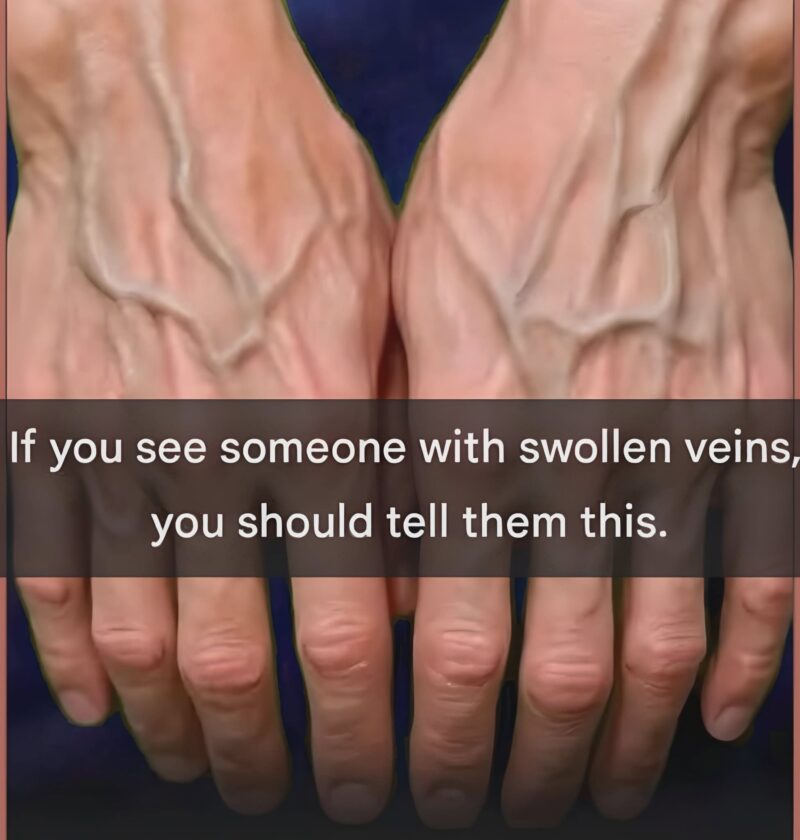
The phrase “If your veins are visible, it means you are…” is usually followed online with exaggerated claims like “super healthy,” “very fit,” or “dangerously dehydrated.” The truth is much more simple: visible veins can mean several different things—most of them normal.
🩸 What visible veins actually mean
Veins become more noticeable mainly when they are closer to the skin or less covered by fat. This is called vascular visibility.
Common reasons include:
1) Low body fat (most common)
- Less fat under the skin = veins show more easily
- Often seen in athletes or lean individuals
- Not automatically a health issue
2) Exercise and muscle pump
- After workouts, muscles push veins closer to the skin
- Temporary increase in blood flow makes veins stand out
- Common in arms, hands, and legs
3) Heat or warm weather
- Blood vessels expand (vasodilation)
- Veins become more visible temporarily
4) Genetics
- Some people naturally have more visible veins even at normal weight
- Skin thickness also plays a role
5) Aging or skin changes
- Skin becomes thinner over time
- Veins may look more prominent in older adults
⚠️ When visible veins might be a concern
Usually harmless, but consider attention if veins are:
- Suddenly swollen, painful, or hard
- Accompanied by redness or warmth
- Only in one leg or arm (possible clot concern)
- Bulging and twisted (possible varicose veins)
These may relate to conditions like varicose veins or circulation problems, which should be checked.
🧠 Bottom line
Visible veins most often mean:
You are lean, active, warm, or genetically predisposed—not necessarily “extra healthy” or “unhealthy.”
If you want, I can also explain the difference between