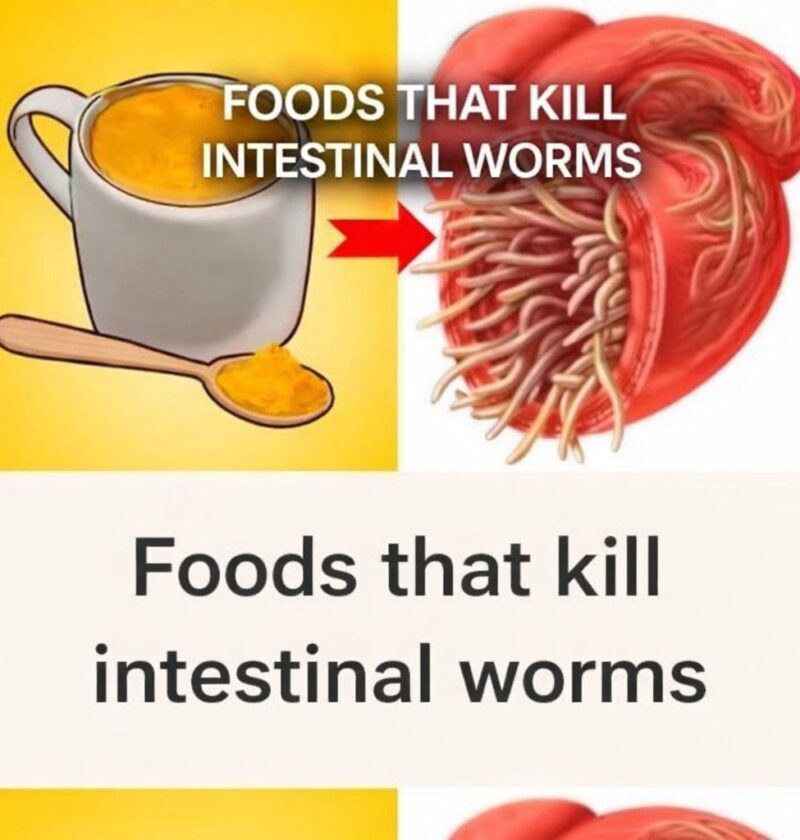
That title is another classic clickbait claim. There is no reliable evidence that any food “kills intestinal worms” on its own or cures a parasitic infection. Intestinal worms (like roundworms, tapeworms, or hookworms) usually require medical treatment with anti-parasitic medications, not diet-based fixes.
That said, some foods are sometimes discussed in traditional medicine or early lab studies as having mild antiparasitic properties—but they should be seen as supportive at best, not treatments.
What the science actually says
🧄 Garlic
Often claimed to “kill worms.”
- Contains compounds with mild antimicrobial effects
- Some lab studies show activity against parasites
- But no strong human evidence that it cures infections
🎃 Pumpkin seeds
- Contain compounds (like cucurbitacin) that may affect parasites
- Traditionally used in some cultures
- May help expel mild infestations in combination with treatment, but not reliable alone
🥥 Coconut
- Lauric acid has antimicrobial properties
- Limited evidence against parasites in humans
- Not a standalone treatment
🥕 Carrots
- High fiber may help gut movement
- Can support bowel clearance, but does not kill worms
🌿 Papaya seeds
- Some early studies suggest antiparasitic activity
- Evidence is limited and not standardized or clinically proven
🍎 Apple cider vinegar
- Sometimes claimed to “clean the gut”
- No evidence it kills intestinal worms
- May irritate stomach if overused
🧂 Fermented foods (yogurt, kefir)
- Support gut microbiome
- May help general gut health but do not eliminate parasites
The important medical reality
If someone actually has intestinal worms, the effective treatments are:
- Albendazole
- Mebendazole
- Ivermectin (for specific parasites)
These are clinically proven and fast-acting.
When to suspect intestinal worms
- Persistent stomach pain or bloating
- Unexplained weight loss
- Itching around the anus (especially at night)
- Visible worms in stool (in some cases)
Bottom line
Foods can support gut health, but they do not reliably kill intestinal worms. Headlines like this are designed to oversimplify and attract attention.
If you want, I can tell you which symptoms actually match different types of worm infections and when to see a doctor—that part is often more useful than the viral food lists.