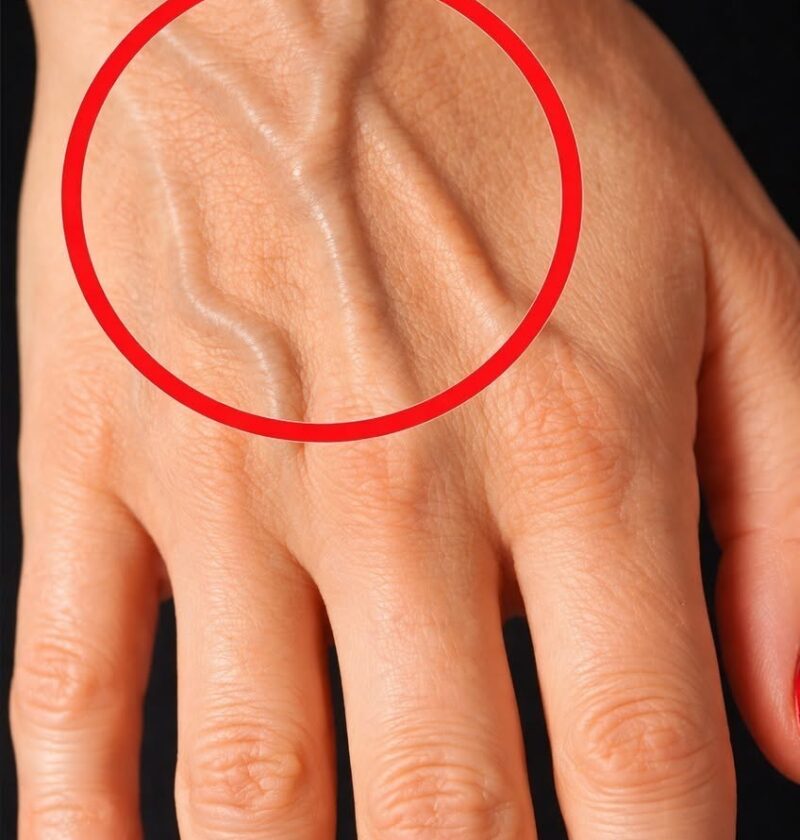
The claim “If your veins are visible, it means you are…” is incomplete and often used as clickbait. In most cases, visible veins are normal and do not indicate a specific disease.
Common reasons veins are more visible include:
- Thin or fair skin: Veins are easier to see through lighter or thinner skin.
- Low body fat: People with less fat under the skin often have more noticeable veins.
- Exercise: Veins can temporarily become more prominent during or after physical activity because of increased blood flow.
- Aging: As skin becomes thinner with age, veins may stand out more.
- Warm weather: Heat causes blood vessels to expand, making veins easier to see.
- Genetics: Some people naturally have more visible veins.
Sometimes, visible veins may be related to a medical condition, such as:
- Varicose veins, which are enlarged, twisted veins that may cause aching, heaviness, or swelling.
- Less commonly, conditions that affect circulation or the veins.
You should seek medical evaluation if visible veins are accompanied by:
- pain, swelling, or warmth,
- redness or tenderness,
- skin ulcers,
- sudden swelling of one arm or leg,
- a vein that becomes hard and very painful.
For most healthy people, simply having visible veins—especially on the hands, arms, feet, or legs—is not a sign of illness and does not mean you have a specific medical condition. If you’re concerned about a particular vein or new changes, describe where it is and what you’ve noticed, and I can help explain what might be going on.