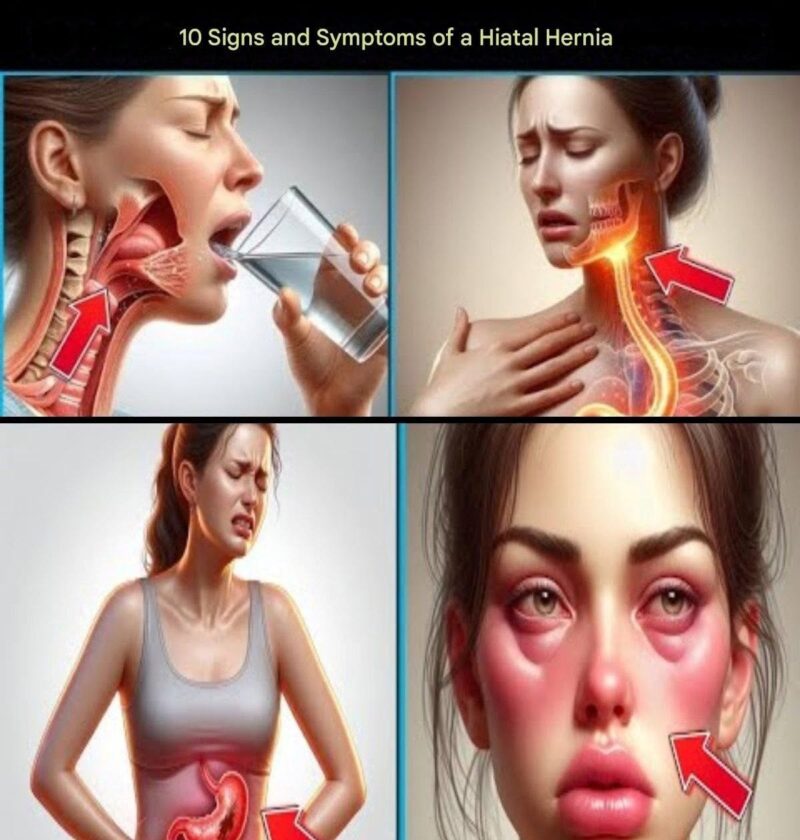
A hiatal hernia occurs when part of the stomach pushes upward through the opening in the diaphragm (the hiatus) that normally allows the oesophagus to pass into the abdomen. Many hiatal hernias cause no symptoms and are discovered incidentally, but some can contribute to acid reflux and digestive discomfort.
10 possible signs and symptoms of a hiatal hernia
- Heartburn
- A burning feeling behind the breastbone, often worse after meals or when lying down.
- Acid reflux
- Stomach acid or food coming back up into the throat or mouth.
- Chest discomfort or pain
- Pressure or burning in the chest can occur, though chest pain should always be assessed carefully because heart problems can feel similar.
- Difficulty swallowing (dysphagia)
- A feeling that food is sticking or moving slowly down the oesophagus.
- Frequent belching
- Increased burping or a feeling of trapped gas.
- Bloating or feeling overly full
- Some people notice abdominal fullness after eating.
- Regurgitation
- Bringing up small amounts of food or sour fluid, especially when bending over or lying down.
- Chronic cough
- Reflux associated with a hiatal hernia can irritate the throat and airways.
- Hoarse voice or throat irritation
- Acid reaching the throat can cause voice changes or a “lump in the throat” sensation.
- Nausea or upper abdominal discomfort
- Some people experience queasiness or discomfort after meals.
Factors that can increase risk
- Increasing age
- Obesity
- Pregnancy
- Chronic coughing or straining
- Heavy lifting
- Conditions that increase pressure inside the abdomen
When to seek medical advice
Get medical help if you have:
- Severe or persistent chest pain
- Trouble swallowing that is worsening
- Vomiting blood or black stools
- Unexplained weight loss
- Persistent vomiting
- Symptoms that do not improve with lifestyle changes or treatment
Common ways symptoms are managed
Depending on severity, treatment may include:
- Eating smaller meals
- Avoiding lying down soon after eating
- Reducing foods that trigger reflux
- Weight management if appropriate
- Medicines that reduce stomach acid (such as proton pump inhibitors)
- Surgery in selected cases
A hiatal hernia itself is often not dangerous, but symptoms that resemble reflux or chest problems should be evaluated rather than assumed to be “just a hernia.”