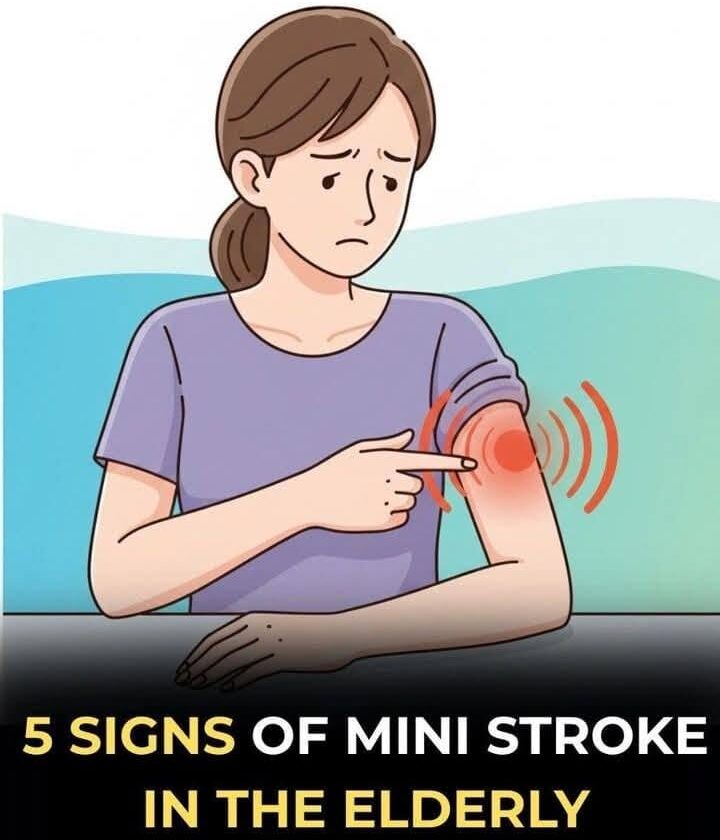
A “mini stroke” is medically called a Transient Ischemic Attack (TIA). It happens when blood flow to the brain is temporarily blocked and then restored. Even though symptoms may disappear within minutes or hours, it is a serious warning sign of a future stroke.
A TIA is related to Stroke and should always be treated as an emergency risk condition.
⚠️ 5 common signs of a mini stroke in the elderly
1. Sudden weakness or numbness (especially one side)
- Face, arm, or leg may feel weak or “dead”
- Often affects only one side of the body
2. Speech problems
- Slurred speech
- Trouble finding words
- Difficulty understanding others
3. Vision changes
- Blurred vision
- Double vision
- Temporary loss of vision in one eye
4. Dizziness or loss of balance
- Sudden unsteadiness while walking
- Feeling like the room is spinning
- Trouble coordinating movements
5. Sudden confusion or mental fog
- Disorientation
- Difficulty focusing or remembering
- Acting unusually confused for a short time
🚨 Important warning
Even if symptoms go away in minutes, a TIA is a medical emergency warning sign. It means a full stroke may happen soon if not treated.
Risk is higher in people with:
- High blood pressure
- Diabetes (like Type 2 Diabetes)
- Smoking history
- Heart disease
🧠 What to do immediately
If any of these signs appear:
- Seek emergency medical care right away
- Do NOT wait for symptoms to go away
- Early treatment can prevent a major stroke
💡 Simple reminder (FAST test)
- Face drooping
- Arm weakness
- Speech difficulty
- Time to call emergency help
If you want, I can also explain how to reduce stroke risk in older adults with simple daily habits and diet changes.