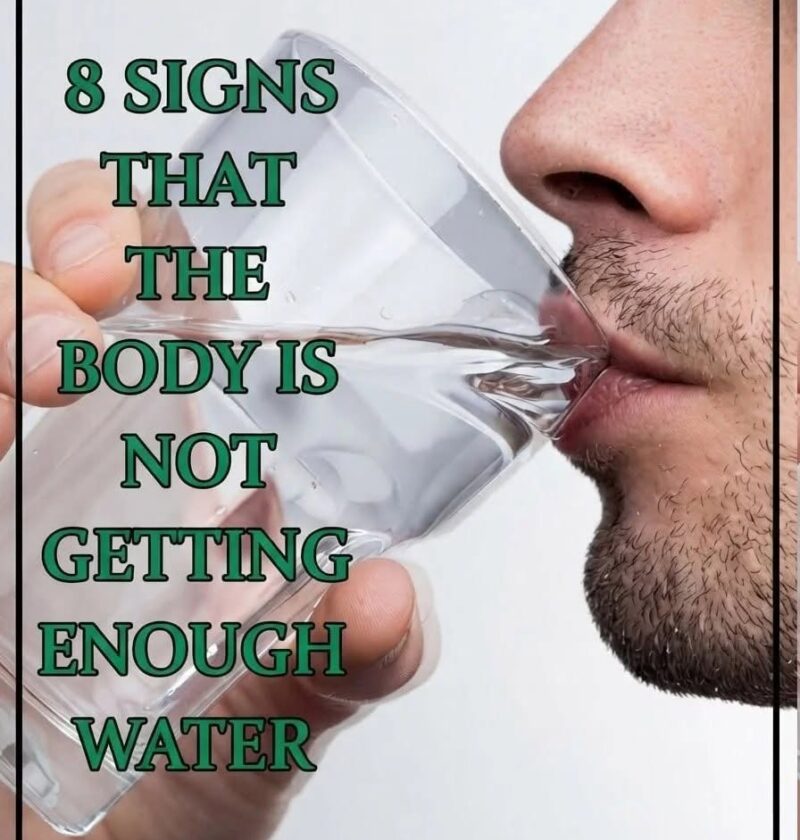
The headline “8 signs that the body is not getting enough water” is broadly reasonable, but lists like this are often presented too dramatically. Mild dehydration is common and can usually be corrected by increasing fluid intake, but persistent or severe symptoms may need medical attention.
Common signs that you may not be drinking enough fluids include:
- Thirst – one of the body’s main signals for needing fluids.
- Dark yellow urine – urine that is more concentrated can indicate lower fluid intake (though some medications and foods can also change color).
- Dry mouth or dry lips – reduced saliva production can occur with dehydration.
- Fatigue or low energy – dehydration can affect physical and mental performance.
- Headache or dizziness – fluid imbalance can contribute to these symptoms.
- Constipation – inadequate fluid intake can make stools harder.
- Reduced urination – producing less urine than usual can be a sign of dehydration.
- Dry skin – skin dryness can be associated with low fluid intake, though many other factors can cause it.
Helpful habits:
- Drink regularly throughout the day rather than waiting until you are very thirsty.
- Increase fluids during hot weather, exercise, fever, vomiting, or diarrhea.
- Eat water-rich foods such as fruits and vegetables.
- Pay attention to your urine color as a general guide.
People with certain conditions (such as heart failure, kidney disease, or fluid restrictions) should follow their healthcare provider’s advice rather than simply increasing water intake.