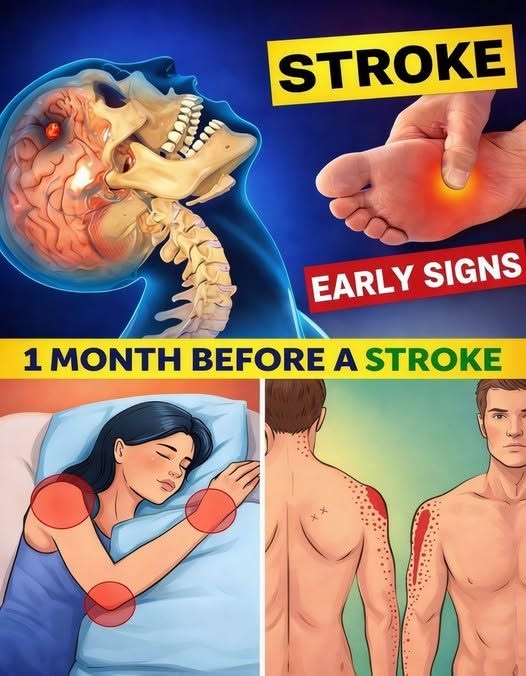
Many articles and social media posts claim there are “8 warning signs of stroke one month before,” but that framing is misleading. Most strokes occur suddenly, without symptoms appearing weeks in advance.
However, some people experience a transient ischemic attack (TIA), often called a “mini-stroke,” before a stroke. A TIA causes temporary stroke-like symptoms that usually resolve within minutes to hours, but it is a medical emergency because it can be a warning that a full stroke may occur soon.
Possible warning signs of a TIA or stroke include:
- Sudden weakness or numbness, especially on one side of the body.
- Sudden trouble speaking or understanding speech.
- Sudden vision loss or blurred vision in one or both eyes.
- Sudden dizziness, loss of balance, or difficulty walking.
- Sudden severe headache with no known cause.
These symptoms do not typically appear gradually over a month. If any occur—even if they go away—seek emergency medical care immediately.
To reduce your risk of stroke:
- Keep high blood pressure under control.
- Don’t smoke or vape nicotine.
- Manage diabetes if you have it.
- Treat high cholesterol.
- Exercise regularly (aim for at least 150 minutes of moderate activity per week).
- Eat a diet rich in fruits, vegetables, whole grains, and lean proteins.
- Maintain a healthy weight.
- Limit alcohol consumption.
- If you have conditions like atrial fibrillation, take prescribed medications as directed.
A simple way to remember the signs of stroke is FAST:
- Face drooping
- Arm weakness
- Speech difficulty
- Time to call emergency services immediately
The key takeaway is that there are no reliable “one-month warning signs” of stroke. Sudden neurological symptoms require immediate medical attention, even if they disappear quickly.