8 Warning Signs That Could Precede a Stroke—and 9 Ways to Lower Your Risk
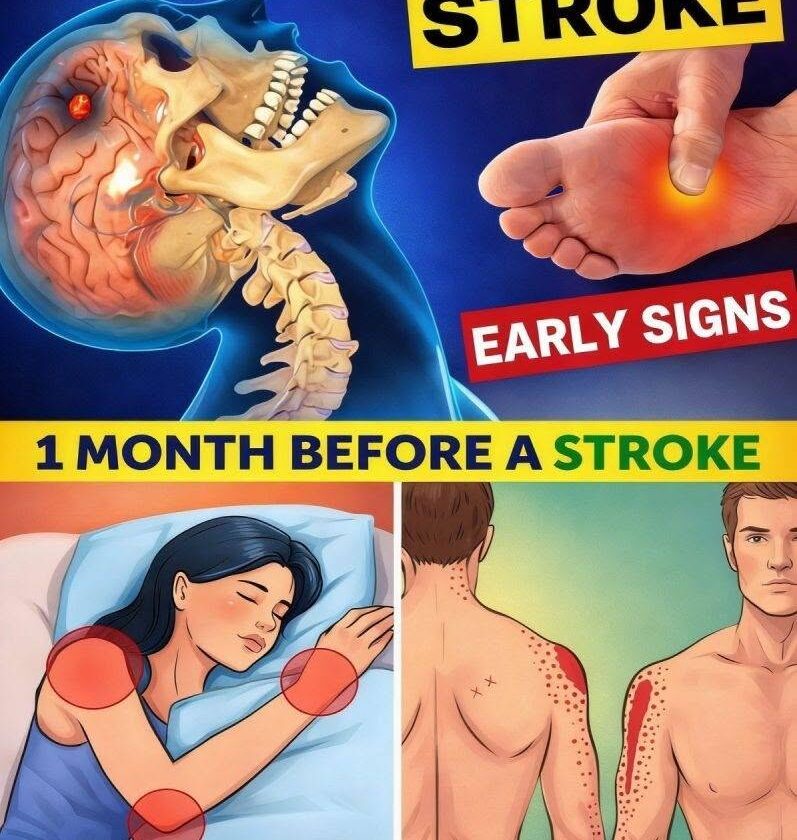
A stroke can happen suddenly, but sometimes a transient ischemic attack (TIA) occurs first. A TIA causes stroke-like symptoms that usually resolve, but it is a serious warning that a stroke may follow.
There is no reliable test that can predict a stroke exactly one month in advance. The key is recognizing sudden neurological symptoms and acting immediately.
🚨 8 warning signs you should never ignore
1. Sudden weakness or numbness
Especially in the face, arm, or leg—and particularly on one side of the body.
2. Sudden facial drooping
One side of the face may suddenly feel numb or droop when smiling.
3. Sudden speech problems
Speech may become slurred, confused, or difficult to produce.
4. Sudden trouble understanding
A person may suddenly have difficulty understanding what others are saying.
5. Sudden vision changes
Blurred, double, or lost vision in one or both eyes can be a warning sign.
6. Sudden loss of balance or coordination
Unexpected dizziness, difficulty walking, or loss of coordination can occur.
7. Sudden severe headache
A sudden, unusually severe headache with no known cause can be a stroke warning sign.
8. Symptoms that disappear after a few minutes
Don’t assume you’re safe because the symptoms went away. This may be a TIA—a warning stroke that requires urgent medical evaluation.
⏱️ Remember B.E. F.A.S.T.
B — Balance: Sudden loss of balance
E — Eyes: Sudden vision changes
F — Face: Facial drooping
A — Arm: Weakness or numbness
S — Speech: Difficulty speaking or understanding
T — Time: Call emergency medical services immediately
Note the time the symptoms started. Don’t drive yourself to the hospital. Even if symptoms disappear, emergency evaluation is still needed.
❤️ 9 ways to help reduce your stroke risk
1. Control your blood pressure
High blood pressure is one of the most important modifiable stroke risk factors.
2. Know your cholesterol levels
Work with your healthcare professional to manage high LDL cholesterol when necessary.
3. Manage diabetes
Keeping blood glucose under control can reduce vascular complications.
4. Don’t smoke
Smoking damages blood vessels and increases stroke risk.
5. Stay physically active
Regular physical activity supports cardiovascular health and helps manage blood pressure and weight.
6. Follow a heart-healthy eating pattern
Emphasize vegetables, fruits, whole grains, legumes, nuts, and other minimally processed foods while limiting excess sodium and unhealthy fats.
7. Maintain a healthy weight
If you are overweight, even gradual, sustainable weight loss can improve several cardiovascular risk factors.
8. Limit alcohol