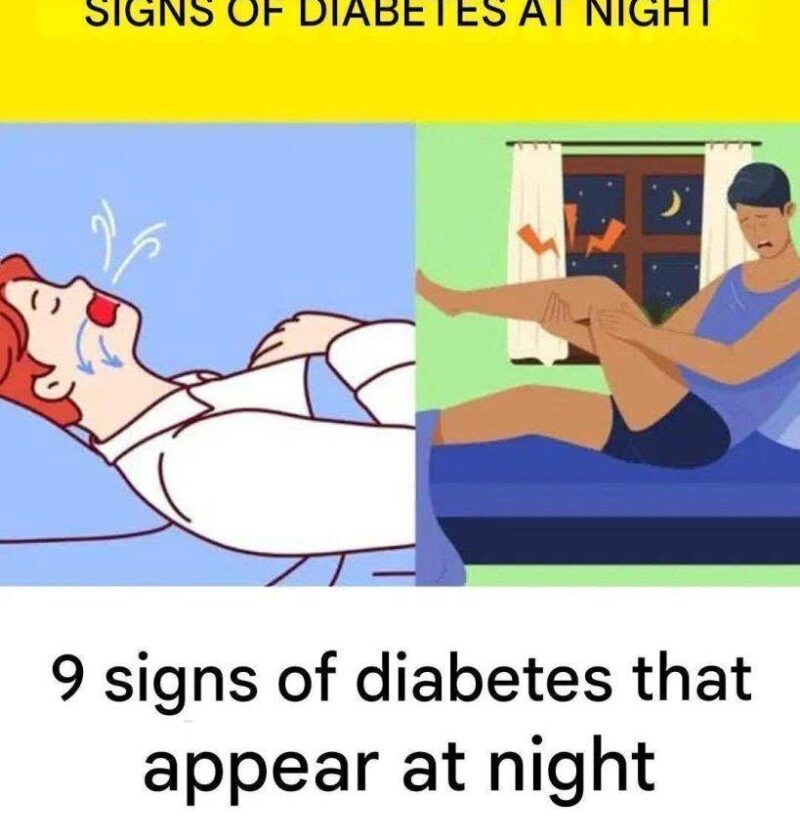
Nighttime symptoms can sometimes be associated with diabetes, but none of these signs alone proves that someone has diabetes. If symptoms are persistent, testing is the only way to know for sure.
Common nighttime signs that may be linked to diabetes include:
- Frequent urination at night (nocturia) – High blood sugar can cause the kidneys to produce more urine.
- Excessive thirst during the night – Often accompanies frequent urination.
- Night sweats – Can occur if blood sugar drops too low during sleep, especially in people using diabetes medications.
- Restless sleep – Blood sugar fluctuations may disrupt sleep quality.
- Waking up hungry – Sometimes associated with changes in blood sugar levels overnight.
- Dry mouth upon waking – May result from dehydration caused by high blood sugar.
- Headaches in the morning – Can have many causes, including blood sugar abnormalities.
- Tingling, burning, or numbness in the feet – Symptoms of nerve damage that may be more noticeable at night.
- Recurring nighttime infections or itching – High blood sugar can increase susceptibility to certain infections and skin irritation.
It’s important to remember that these symptoms can also be caused by many other conditions. The most common symptoms of diabetes overall include increased thirst, frequent urination, increased hunger, unexplained weight loss, fatigue, and blurred vision.
If someone is experiencing symptoms that raise concern about diabetes, a healthcare professional can evaluate them with tests such as:
- Fasting blood glucose
- Hemoglobin A1c (HbA1c)
- Oral glucose tolerance test
Type 2 Diabetes and Type 1 Diabetes are both diagnosable through appropriate medical testing rather than symptoms alone.