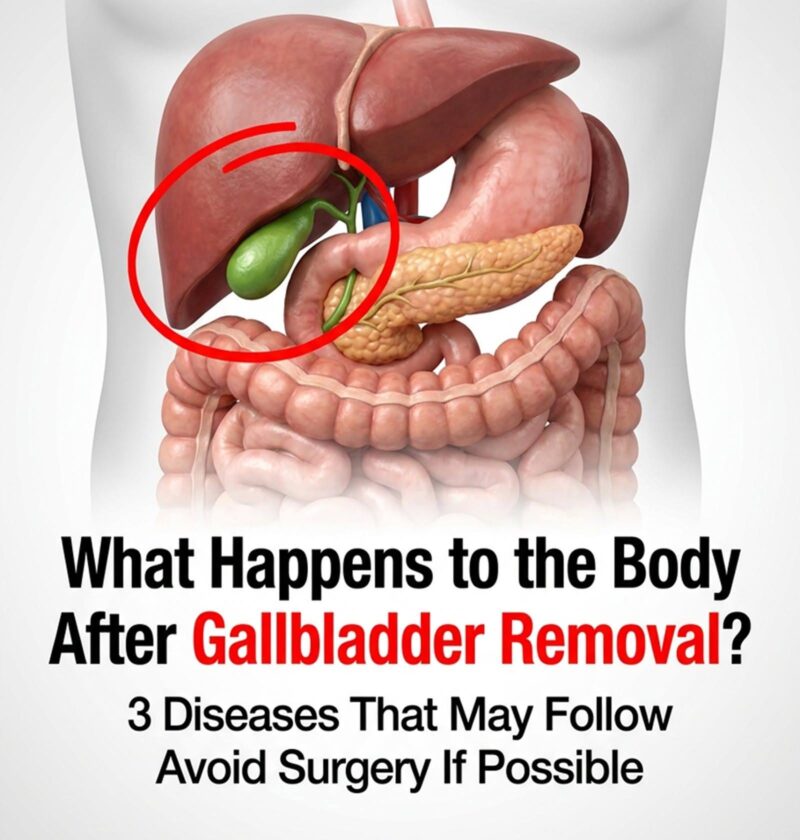
If you’re referring to the claim “What really happens to your body after gallbladder removal? The answer is more surprising—and more reassuring than many people expect,” the main message is that most people adapt well after gallbladder removal.
The gallbladder’s job is to store and concentrate bile, a digestive fluid made by the liver. After removal (cholecystectomy), the liver still makes bile—it simply flows directly into the small intestine instead of being stored.
What commonly happens after gallbladder removal?
✅ Most people return to a normal diet
- Many can eat normally after recovery.
- Some people find that very fatty or greasy meals are harder to tolerate at first.
✅ Digestion usually continues normally
- The body does not stop digesting fats.
- The digestive system adjusts to the continuous flow of bile.
Possible short-term effects
Some people may experience:
- Loose stools or diarrhea
- Gas or bloating
- Mild abdominal discomfort
- Nausea after certain foods
These symptoms often improve as the body adjusts.
Possible longer-term issues (in some people)
- Bile acid diarrhea: Excess bile entering the intestine can irritate it and cause ongoing diarrhea; this can often be treated.
- Post-cholecystectomy symptoms: A small number of people have continued digestive discomfort after surgery, sometimes due to other digestive conditions rather than the surgery itself.
Does gallbladder removal cause serious diseases?
Online claims sometimes suggest that removal “causes” many diseases, but the evidence does not support the idea that gallbladder removal is generally harmful. The procedure is commonly recommended when gallstones or gallbladder disease create risks such as repeated pain attacks, infection, or pancreatitis.
When is gallbladder removal considered?
Doctors may recommend surgery for problems such as:
- Frequent painful gallstone attacks
- Gallbladder inflammation (cholecystitis)
- Blocked bile ducts
- Gallstone-related pancreatitis
Bottom line: For people who need it, gallbladder removal is usually a safe and effective treatment. Most people live normal lives afterward, with only a minority needing dietary adjustments or additional treatment.