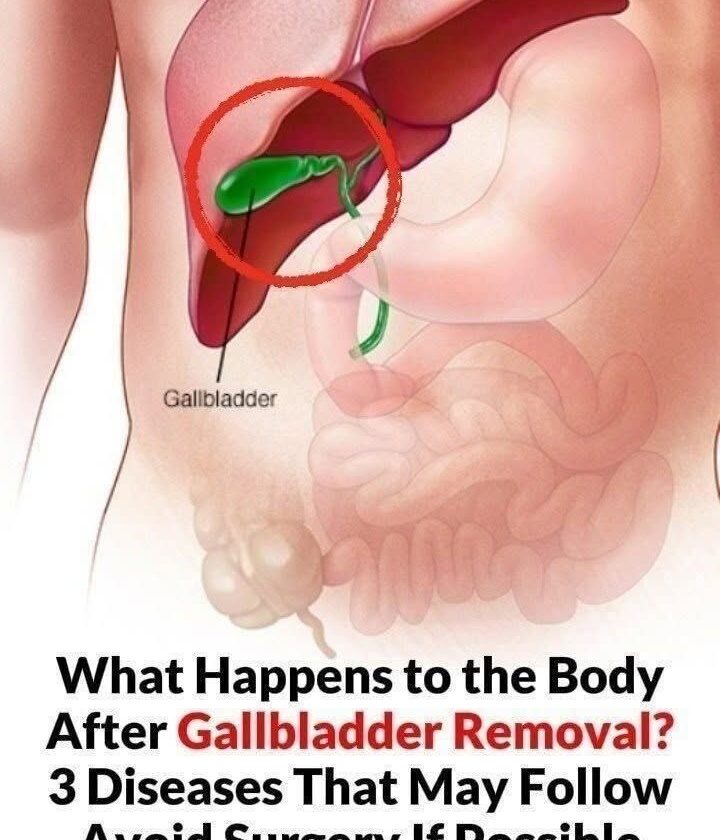
The headline “After gallbladder removal: 3 conditions you could develop — why you should avoid the surgery when possible” is a common fear-based framing. The reality is more balanced: gallbladder removal (cholecystectomy) is a very common and generally safe surgery, and for many people it is the best treatment for repeated gallstones, gallbladder inflammation, or certain complications.
After gallbladder removal, some people may experience:
- Digestive changes
- Because bile flows directly from the liver into the intestine instead of being stored in the gallbladder, some people have bloating, gas, or discomfort—especially after fatty meals.
- Diarrhea or changes in bowel habits
- A small number of people develop ongoing loose stools after surgery. This is often manageable with diet changes or medical treatment.
- Bile-related issues (less common)
- Some people may have bile reflux or irritation of the digestive tract, though serious long-term problems are uncommon.
However, avoiding surgery is not always safer. Untreated gallbladder problems can lead to complications such as:
- Gallbladder infection (cholecystitis)
- Blocked bile ducts
- Pancreatitis
- Recurrent severe pain attacks
Doctors usually recommend surgery when the benefits outweigh the risks—for example, in people with symptomatic gallstones or repeated attacks.
If you’re considering gallbladder surgery, the decision depends on factors like why it’s being recommended, your symptoms, your age, other health conditions, and the risks of waiting.
If you share whether the surgery is being suggested for gallstones, infection, polyps, pain, or another reason, I can explain the usual pros and cons in that situation.