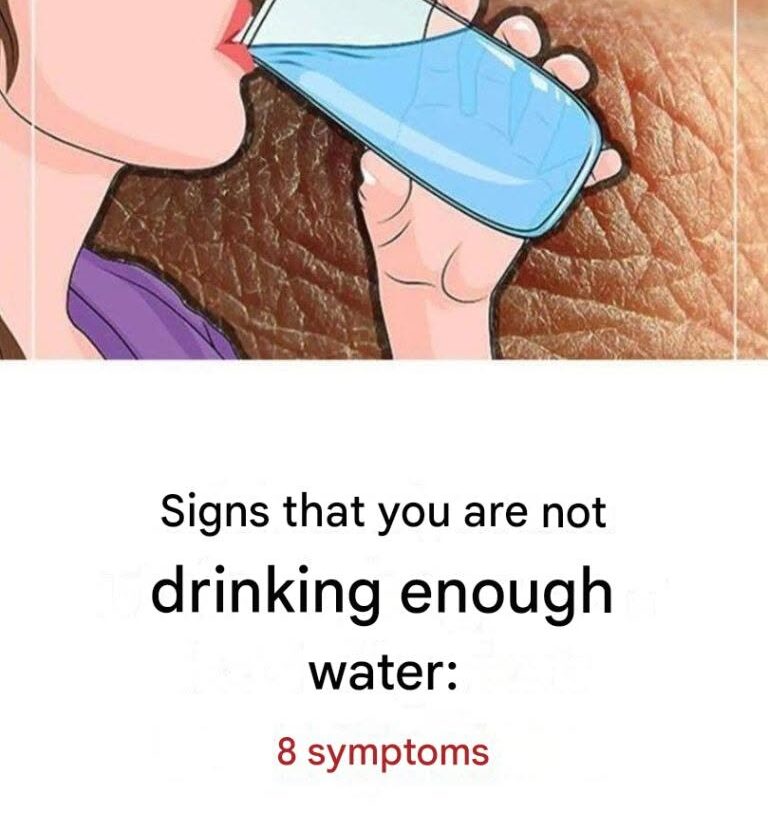
Not drinking enough water can lead to dehydration, which affects nearly every system in the body. The severity depends on how much fluid you’re missing and your overall health.
Mild dehydration
You may notice:
- Thirst
- Dry mouth or lips
- Dark yellow urine or urinating less often
- Headache
- Fatigue or low energy
- Dizziness or lightheadedness
Moderate dehydration
As dehydration worsens, it can cause:
- Faster heart rate
- Difficulty concentrating
- Muscle cramps
- Constipation
- Dry skin
- Reduced physical performance
Severe dehydration (medical emergency)
Severe dehydration can be dangerous and may lead to:
- Confusion or difficulty staying alert
- Very little or no urine
- Rapid breathing or heartbeat
- Low blood pressure
- Fainting
- Heat-related illness
- Kidney injury
Long-term effects of inadequate fluid intake
If you regularly don’t drink enough fluids, you may have a higher risk of:
- Kidney stones
- Recurrent urinary tract infections (in some people)
- Constipation
- Reduced exercise tolerance
How much water do you need?
There’s no single amount that’s right for everyone. Your needs depend on:
- Your body size
- Physical activity
- Weather and climate
- Pregnancy or breastfeeding
- Certain medical conditions
A practical way to judge hydration is to:
- Drink when you’re thirsty.
- Aim for pale yellow urine most of the time (some medications and vitamins can change urine color).
If you have conditions such as heart failure, kidney disease, or liver disease, your healthcare provider may recommend limiting fluids, so more water is not always better.
Seek medical care promptly if someone has signs of severe dehydration, such as confusion, inability to keep fluids down, very little urine, or fainting.