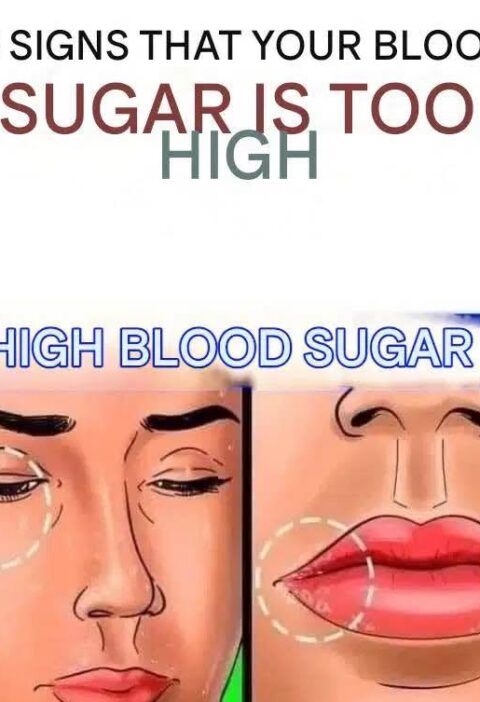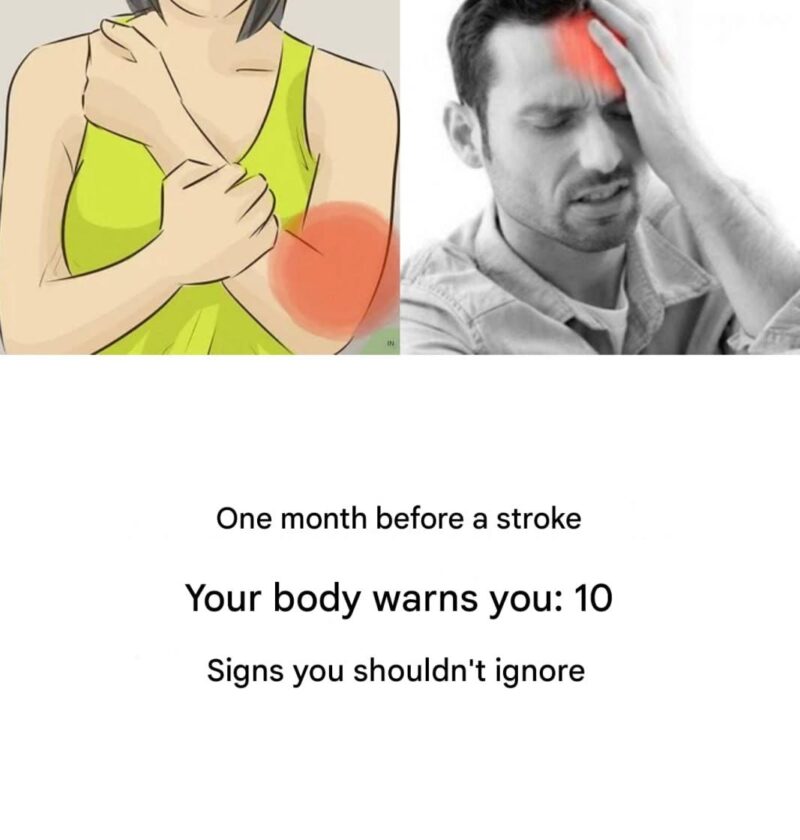
The claim “Your body warns you one month before a stroke: 10 signs you shouldn’t ignore” is a common online headline, but it is misleading. A stroke does not usually follow a predictable one-month warning period.
What is true: some people experience a transient ischemic attack (TIA), sometimes called a “mini-stroke,” before a major stroke. A TIA can cause stroke-like symptoms that often resolve, but it is still a medical emergency because it may signal increased stroke risk.
Warning signs that should not be ignored include:
- Sudden weakness or numbness in the face, arm, or leg (especially on one side)
- Facial drooping or an uneven smile
- Sudden trouble speaking or understanding speech
- Sudden confusion
- Sudden vision changes
- Sudden dizziness, loss of balance, or difficulty walking
- Sudden severe headache with no known cause
- Sudden difficulty swallowing
A quick way to remember key signs is FAST:
- F — Face: Is one side of the face drooping?
- A — Arms: Is one arm weak or drifting downward?
- S — Speech: Is speech slurred or strange?
- T — Time: Seek emergency help immediately.
Risk factors that increase stroke risk include high blood pressure, diabetes, smoking, high cholesterol, atrial fibrillation, and previous TIA or stroke.
If stroke symptoms appear, do not wait to see if they improve—urgent medical attention can make a major difference.