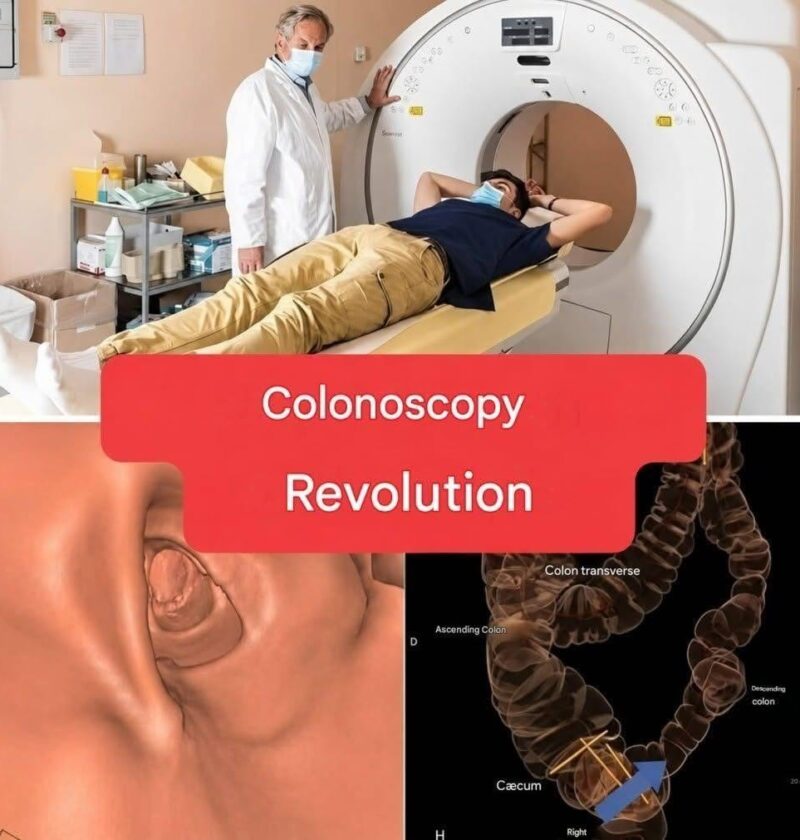
The claim “New method: colonoscopy will no longer be an invasive examination” refers to newer screening technologies that may reduce the need for a traditional colonoscopy in some situations. However, the headline is an exaggeration—colonoscopy has not been completely replaced.
A traditional colonoscopy uses a flexible camera inserted through the rectum to examine the colon. It remains valuable because doctors can:
- Find suspicious growths or polyps
- Take tissue samples (biopsies)
- Remove certain polyps during the same procedure
Less invasive or non-invasive alternatives include:
1. Stool-based tests
- Tests such as FIT (fecal immunochemical test) look for hidden blood in stool.
- Some DNA-based stool tests look for changes linked to colorectal cancer.
- They are easier to do at home, but abnormal results usually require a colonoscopy.
2. CT colonography (“virtual colonoscopy”)
- Uses CT scans to create images of the colon.
- It avoids inserting a camera into the colon, but bowel preparation is still usually required.
- If a suspicious area is found, a standard colonoscopy may still be needed.
3. Capsule endoscopy
- A person swallows a small camera capsule that travels through the digestive tract.
- This technology is being studied and used in certain settings, but it is not a complete replacement for colonoscopy.
Bottom line:
New methods may make colorectal screening easier and less invasive for some people, but colonoscopy remains an important diagnostic and treatment tool.
If you share the second part “(2/2)”, I can review the full claim and explain whether the specific “new method” is real and how it works.